Table of Contents
- Quick Answer: What Is the Best Siding Material for Seattle Weather?
- Why Seattle Weather Changes the Siding Decision
- How KV Evaluates Siding Materials
- Seattle Siding Material Comparison Matrix
- Best Overall: James Hardie / Fiber Cement Siding
- Cedar Siding: Beautiful, Natural, and High Maintenance
- Vinyl Siding: Lower Upfront Cost, But Not Always the Best Long-Term Fit
- LP SmartSide / Engineered Wood: A Serious Alternative, But Not KV’s Core Recommendation
- Metal Siding: Durable and Modern, But Best as a Design-Specific Choice
- Stucco and EIFS: High Caution in Wet Wood-Framed Assemblies
- Brick, Stone Veneer, and Masonry Accents
- Aluminum Siding: A Legacy Material That Often Signals Replacement
- Hardboard, Masonite-Type Siding, and T1-11: Common Replacement Candidates
- Fiberglass Siding: Niche Option, Not a Default Seattle Recommendation
- Best Siding by Property Type
- Best Siding If You Are Replacing Old Cedar
- Best Siding If You Are Replacing Vinyl
- Best Siding If You Are Replacing Stucco
- Best Siding for Energy Efficiency
- Best Siding Color and Finish Strategy for Seattle
- Why the Cheapest Siding Bid Can Be Expensive in Seattle
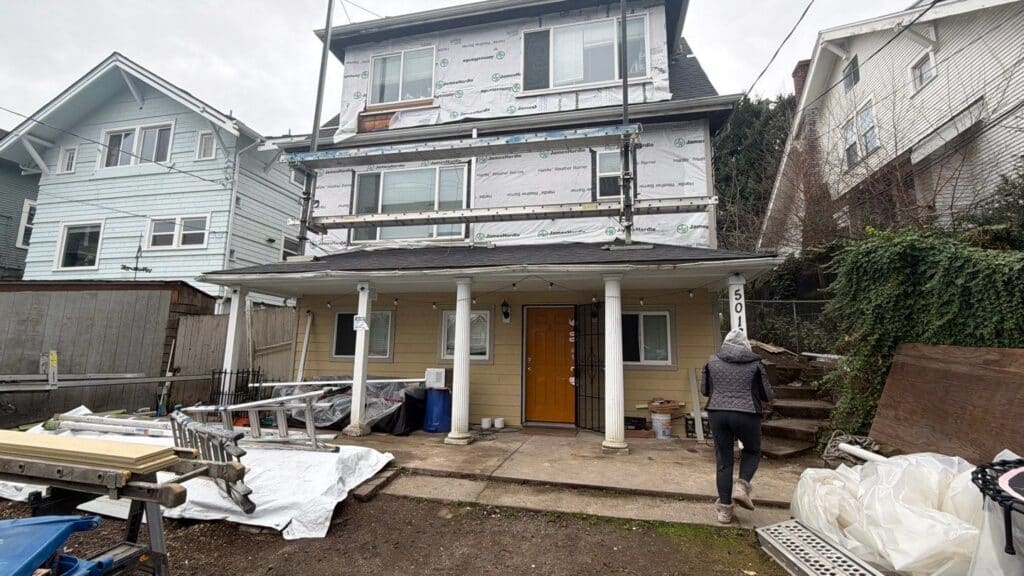
- Installation Details That Matter More Than Most Homeowners Realize
- Repair vs Replacement: When a Material Problem Is Really a System Problem
- Material Recommendations by Homeowner Goal
- What to Ask Before Choosing a Siding Material
- Why KV Often Recommends James Hardie for Seattle Homes
- Project Proof: How Material Decisions Look on Real KV Jobs
- Final Recommendation
- FAQ
Choosing siding in Seattle is different from choosing siding in a dry climate. A house in the Pacific Northwest does not just need a nice exterior finish. It needs a wall system that can handle rain, shaded elevations, long damp seasons, wind-driven moisture, older window details, deck transitions, gutters, trim joints, and the dry rot risk that often hides behind failing siding.
That is why the best siding material is not always the cheapest material, the most popular material, or the material that looks best in a brochure. The right choice depends on how the material performs as part of the full exterior system.
For many Seattle-area full siding replacement projects, KV Construction LLC most often recommends James Hardie and fiber cement siding because that system offers a strong combination of durability, design flexibility, moisture resistance, fire resistance, lower maintenance than wood, and long-term value when it is installed correctly. But fiber cement is not the only material homeowners ask about. Cedar, vinyl, engineered wood, LP SmartSide, metal, stucco, brick, aluminum, hardboard, T1-11, and fiberglass all show up in siding conversations.
This guide compares those materials from a Pacific Northwest perspective. The goal is not to make every material sound equal. The goal is to help homeowners, property managers, rental property owners, real estate investors, duplex owners, apartment owners, and commercial clients understand what each siding option does well, where it can create risk, and why installation quality matters as much as the material itself.
KV Construction is a family-owned, owner-operated siding replacement company with direct owner involvement, consistent crews, James Hardie Preferred Remodeler status, EPA Lead-Safe certification, a 5-Year KV Workmanship Warranty, an A+ BBB Rating, and a 2025 BBB Torch Award for Ethics Nominee recognition. The company focuses on full siding replacement, James Hardie / fiber cement siding, PNW waterproofing discipline, and dry rot repair and exterior envelope work – not small patch jobs or a few boards here and there.
Planning a full siding replacement in Seattle? Request a Free Siding Consultation with KV Construction.
Planning a full siding replacement?
Request a Free Siding Consultation with KV Construction.


Quick Answer: What Is the Best Siding Material for Seattle Weather?
For most full siding replacement projects in Seattle and the Puget Sound area, fiber cement siding – especially James Hardie – is usually the strongest overall choice when the homeowner wants long-term durability, lower maintenance than cedar, strong curb appeal, and better performance in rainy Pacific Northwest conditions.
The key phrase is when installed correctly.
Fiber cement siding is not a magic board that fixes poor waterproofing. It still needs proper old-siding removal, sheathing inspection, dry rot repair, weather-resistant barrier, flashing, clearances, trim integration, sealant discipline, and correct paint or ColorPlus planning. In Seattle, a premium siding product installed over weak flashing is still a weak exterior system.
Here is the practical KV recommendation:
- Best overall for most Seattle full replacements: James Hardie / fiber cement siding.
- Best natural accent material: Cedar, when used carefully as an accent and maintained properly.
- Best low-upfront-cost option: Vinyl, but it usually is not KV’s preferred direction for high-value full replacements.
- Best wood-based engineered alternative: LP SmartSide, when the homeowner specifically wants engineered wood and understands the maintenance and warranty details.
- Best modern accent option: Metal, when the design calls for it and the details are handled by the right specialist.
- Highest caution in wet climates: Stucco on wood-framed homes unless the drainage plane and flashing are designed very carefully.
- Usually replacement candidates on older homes: Failing hardboard, T1-11, worn aluminum, and neglected wood siding.
If the goal is to replace the exterior once, reduce future maintenance, and protect the structure against Pacific Northwest moisture, fiber cement usually gives the strongest risk-to-value balance.
Why Seattle Weather Changes the Siding Decision
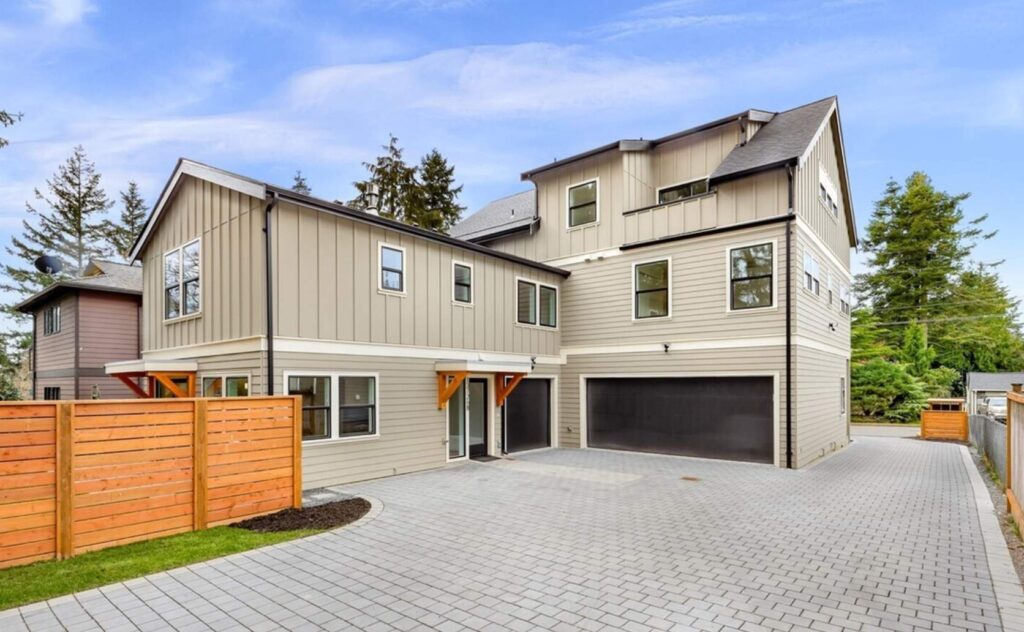
Seattle siding does not fail only because a material is “bad.” It often fails because water finds weak details over time.
A wall can look fine from the street while problems are already developing behind the siding. A trim joint opens. A gutter overflows. A window flashing detail is layered incorrectly. A deck ledger traps moisture. A shaded north-facing wall stays wet for days. A south or west elevation gets heavy wind and sun exposure. Paint breaks down. Cedar starts to cup. Hardboard swells. T1-11 softens near the bottom edge. Vinyl hides moisture behind loose panels. Stucco holds water. A homeowner sees one damaged section, but once the siding is removed, the wall tells a bigger story.
That is why material choice in the Pacific Northwest should be judged by more than appearance.
A good siding material for Seattle should help with:
- long wet seasons;
- wind-driven rain;
- slow-drying shaded walls;
- moisture-prone trim and window transitions;
- dry rot prevention when paired with proper waterproofing;
- lower maintenance over time;
- predictable repainting or finish expectations;
- strong curb appeal for resale;
- compatibility with older Seattle homes and modern remodels;
- proper installation details around WRB, flashing, clearances, and sealant.
The material matters. The wall assembly matters more.
How KV Evaluates Siding Materials
KV Construction evaluates siding materials through a practical replacement lens, not just a product brochure lens. A material may be acceptable in theory but still be a poor fit for a specific Seattle home, a rental property, a duplex, a multifamily building, or a property owner who does not want heavy maintenance.
The decision should include five questions:
- How does the material handle moisture? Seattle rain is not occasional. The siding must work with a drainage and flashing strategy.
- How much maintenance does the material need? A material that looks beautiful but requires frequent attention may not fit every owner.
- What happens when installation details are imperfect? Some materials are more forgiving than others, but no material forgives bad water management forever.
- Does the material match the property’s value and design? A high-value Seattle home, rental portfolio, or apartment building needs a different decision than a quick cosmetic refresh.
- Will the material reduce or increase future risk? The cheapest siding can become expensive if it hides moisture, fails early, or triggers repeated repairs.
For KV’s best-fit customers, the priority is usually not a small patch. It is a full exterior replacement that is properly managed, waterproofed, and built to last.
Seattle Siding Material Comparison Matrix
|
Material |
PNW Moisture Fit |
Maintenance Burden |
Best Use Case |
KV Recommendation |
|
James Hardie / fiber cement |
5/5 |
Low to moderate |
Full siding replacement, rental properties, duplexes, apartments, modern and traditional homes |
Best overall choice for most KV-fit replacement projects |
|
Cedar siding |
3/5 |
High |
Natural accents, historic character, owners committed to maintenance |
Beautiful, but not the lowest-risk full-house choice for low-maintenance owners |
|
Vinyl siding |
2.5/5 |
Low |
Budget-driven projects, simple exteriors, lower-cost upgrades |
Compare carefully; usually not KV’s preferred premium replacement direction |
|
LP SmartSide / engineered wood |
3.5/5 |
Moderate |
Owners who want engineered wood look and impact resistance |
Can work, but KV usually prioritizes fiber cement for PNW replacement risk control |
|
Metal siding |
4/5 |
Low to moderate |
Modern accents, architectural details, commercial-style designs |
Strong niche option; detailing, finish selection, and specialist installation matter |
|
Stucco / EIFS |
2/5 |
Moderate to high |
Specific design needs with engineered drainage |
High caution on wood-framed homes in wet climates without a robust drainage plane |
|
Brick or stone veneer |
3/5 |
Moderate |
Accent veneer, masonry design, durable facade elements |
Treat as reservoir cladding; flashing and weep details matter |
|
Aluminum siding |
2.5/5 |
Low to moderate |
Older homes with legacy siding |
Often better to replace than keep repairing if dented, loose, or outdated |
|
Hardboard / Masonite-type siding |
1.5/5 |
High once aging |
Existing older siding only |
Usually a replacement candidate when swelling, softness, or paint failure appears |
|
T1-11 siding |
1.5/5 |
High |
Sheds or low-budget structures, not ideal for high-value replacement |
Usually not the right long-term answer for Seattle full siding replacement |
|
Fiberglass siding |
3/5 |
Moderate |
Niche projects where product availability and installer experience are clear |
Not a core KV recommendation unless the project has a specific reason |
This matrix is a practical PNW replacement guide, not a universal laboratory rating. A material can perform better or worse depending on wall design, sun exposure, nearby trees, roof overhangs, installation quality, and maintenance.
Best Overall: James Hardie / Fiber Cement Siding
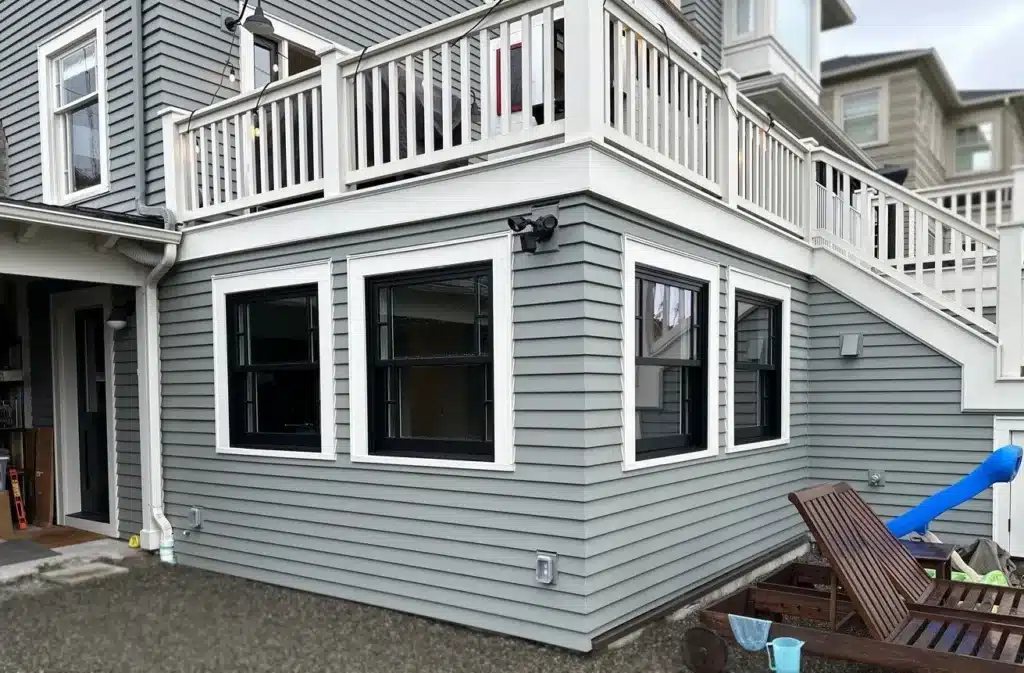
Fiber cement siding is often the best overall material for Seattle homes because it gives homeowners a strong mix of durability, design flexibility, moisture resistance, fire resistance, pest resistance, and long-term curb appeal. James Hardie is the brand many Seattle homeowners ask about first because it offers a full product family: HardiePlank lap siding, HardieShingle, HardiePanel, HardieTrim, HardieSoffit, ColorPlus finishes, and climate-focused HardieZone product lines.
For Seattle and the broader Pacific Northwest, fiber cement works well because it does not carry the same maintenance burden as cedar and does not feel like a low-end cosmetic cover-up when used on a full replacement. It can look traditional, modern, Craftsman, coastal, farmhouse, or clean contemporary depending on the profiles and finish.
Where Fiber Cement Performs Well
Fiber cement is a strong fit when:
- the home needs a full siding replacement;
- older cedar, vinyl, hardboard, aluminum, or T1-11 siding is failing in multiple areas;
- the owner wants lower maintenance than wood;
- the property needs strong resale appeal;
- the homeowner wants lap siding, shingle accents, smooth panels, board-and-batten, or a mixed-profile design;
- the project is a rental, duplex, apartment, hotel, or investment property where durability and predictable maintenance matter;
- the owner wants a material that can be backed by a manufacturer warranty when installed correctly.
James Hardie products also allow KV to build the exterior as a system. A typical high-quality fiber cement replacement conversation includes siding profile, trim, soffit, weather barrier, flashing, sealant, paint or ColorPlus, rot repair, window transitions, and final finish details.
Where Fiber Cement Still Needs Discipline
Fiber cement is durable, but it is not an excuse to ignore the details. It still needs:
- correct clearances from roofing, decks, grade, and hardscape;
- proper flashing over windows, doors, blocks, and horizontal trim;
- correctly layered weather-resistant barrier;
- careful cut edge treatment and finish planning;
- compatible sealant and joint discipline;
- correct fastening;
- trim integration that does not trap water;
- inspection of sheathing and framing before the wall is closed.
This is where KV’s PNW waterproofing discipline matters. The siding board is only one part of the exterior. The wall behind it has to be right.
KV Project Proof: Fiber Cement as a Complete Exterior System
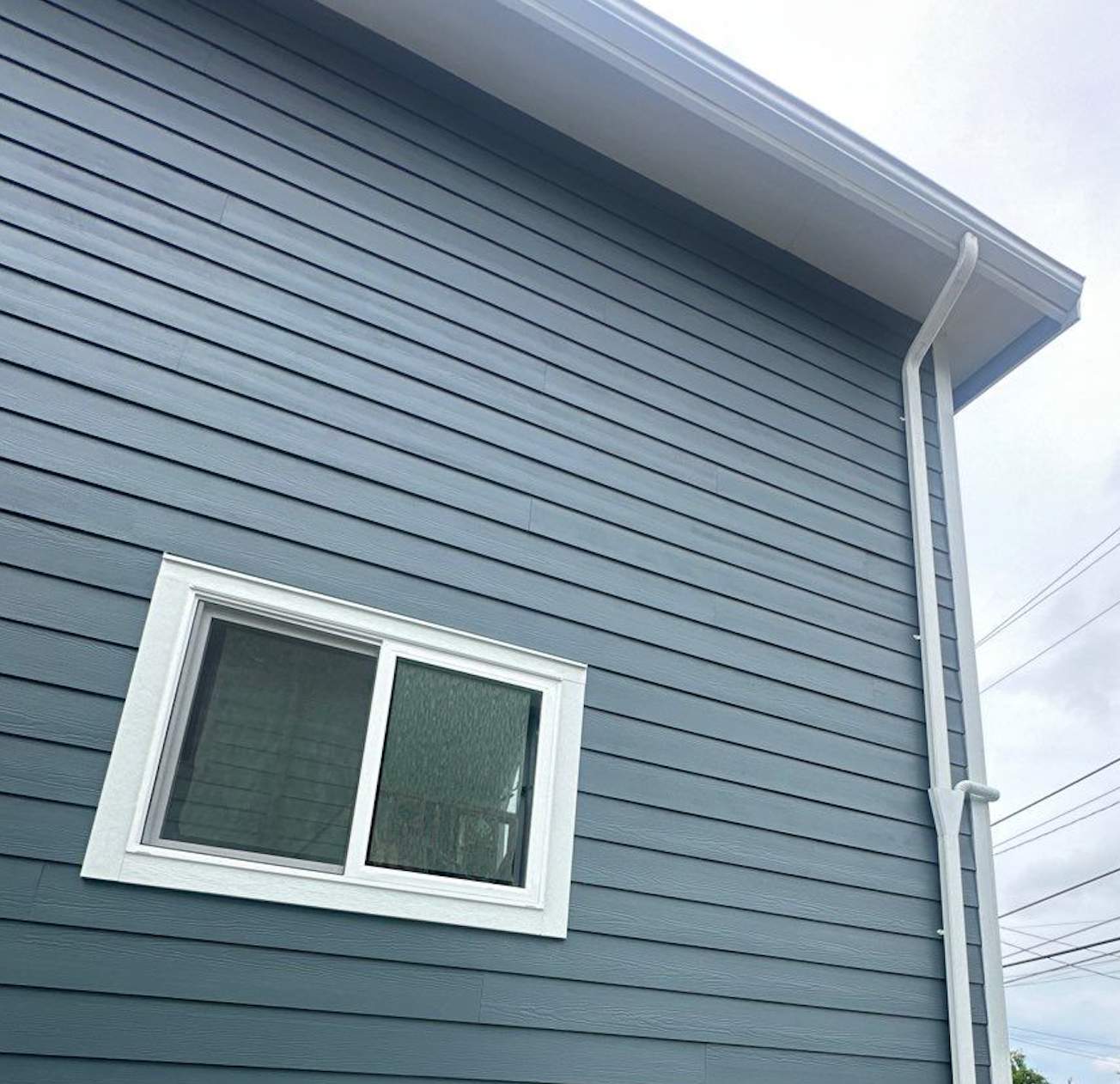
In Seattle’s Phinney Ridge / Greenwood area, KV completed a modern siding transformation using smooth Hardie panels, Hardie lap siding, HydroGap drainable housewrap, outside X-metal corners, and a premium Sherwin-Williams finish. That project is a strong visual proof point for homeowners comparing modern panel looks against traditional lap siding.
In West Seattle, KV replaced tired siding with 8 1/4-inch James Hardie Cedarmill lap panels, HardieShingle Straight Edge gables, cedar accents, Hardie Weather Barrier, and OSB sheathing. That project is a useful proof card for homeowners who want the warmth of wood accents without making the entire home a high-maintenance cedar exterior.
In Lake Stevens, KV used HardiePlank lap siding with HardieShingle gable accents, WeatherSmart barrier, Z-metal flashing at blocks and windows, and careful trim details. That project shows why material choice and water-management details should be discussed together.
In Everett, KV installed primed James Hardie HZ10 fiber cement siding with pre-vented HardieSoffit. That project is especially relevant for homeowners who care about moisture, ventilation, and long-term exterior performance in rain-heavy conditions.
Cedar Siding: Beautiful, Natural, and High Maintenance
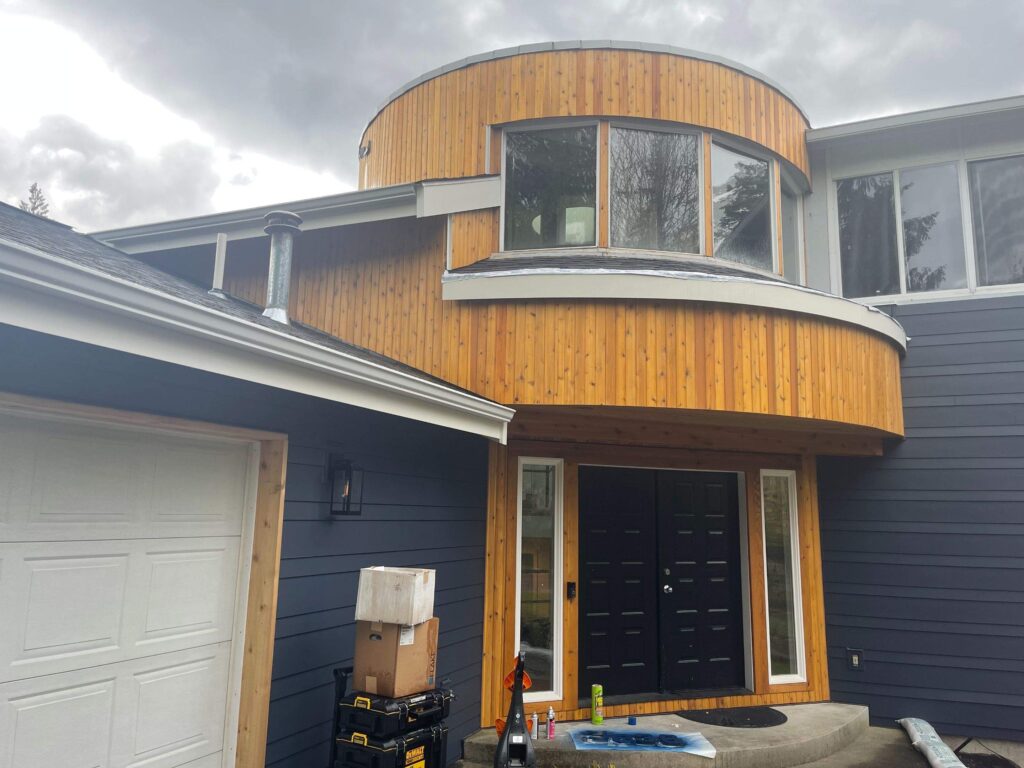
Cedar has a look that many homeowners still love. It feels warm, natural, and appropriate for many older Seattle homes. Cedar accents can look excellent with James Hardie, especially on entryways, soffits, posts, or selected architectural details.
The challenge is maintenance.
Cedar can perform well when it is installed, sealed, finished, and maintained correctly. But in Seattle weather, cedar owners need to be realistic. Moisture exposure, shade, UV, mildew, end grain, stain or paint condition, and regular cleaning all matter. Neglected cedar can cup, split, discolor, absorb moisture, lose coating protection, or become vulnerable around joints and exposed edges.
When Cedar Makes Sense
Cedar can be a good choice when:
- the homeowner specifically wants natural wood character;
- the home has historic or architectural reasons to keep wood siding;
- the owner accepts maintenance as part of the material choice;
- cedar is used as an accent rather than the entire exterior;
- the detailing allows the wood to dry properly;
- the finish system is maintained before failure becomes serious.
When Cedar Is a Poor Fit
Cedar is often a poor fit when:
- the homeowner wants low maintenance;
- the home is shaded and stays damp;
- the property is a rental or investment property where repeated maintenance is difficult;
- old cedar has already failed in many areas;
- the owner is trying to patch scattered areas instead of addressing a larger moisture pattern;
- the project budget does not include proper preparation, finishing, and future maintenance.
KV Recommendation on Cedar
KV does not need to dismiss cedar to recommend fiber cement. Cedar can look excellent, especially in the right accent role. But for most full-house replacement projects where the homeowner wants a lower-maintenance exterior, fiber cement is usually the better long-term choice.
A strong compromise is James Hardie fiber cement as the main siding with cedar used selectively for warmth. The West Seattle project is a good example of that approach: durable Hardie lap siding and shingle details paired with cedar accents for character.
Vinyl Siding: Lower Upfront Cost, But Not Always the Best Long-Term Fit
Vinyl siding is popular because it is widely available, lower in upfront cost, and does not require painting in the same way wood siding does. For some budget-driven projects, it can make sense.
But vinyl is not always the best material for Seattle homeowners who want a high-value, long-term exterior replacement.
Vinyl’s Strengths
Vinyl siding can offer:
- lower upfront cost;
- many color and profile options;
- relatively low routine maintenance;
- no repainting requirement in the typical sense;
- broad availability;
- acceptable performance on simple exteriors when installed correctly.
Vinyl’s Limitations in Seattle Replacement Projects
The limitations become more important on full replacement projects:
- vinyl expands and contracts with temperature changes;
- poor installation can lead to ripples, buckling, or loose details;
- it may not deliver the same premium curb appeal as fiber cement on many Seattle homes;
- it can hide moisture issues behind panels if the underlying wall is not inspected properly;
- impact damage and distortion can become visible over time;
- it does not solve old flashing, trim, or sheathing problems;
- it may be a mismatch for higher-value remodels where the homeowner wants a sharper architectural finish.
KV Recommendation on Vinyl
KV Construction is not positioned as a small vinyl repair or handyman-style patch contractor. If a homeowner is trying to replace a few vinyl panels, remove a small piece, or handle minor vinyl maintenance, that is usually not the right fit.
For full siding replacement, vinyl can be part of a material comparison, but KV usually points Seattle-area homeowners toward fiber cement when the goal is stronger long-term value, better architectural finish, and a more durable exterior system.
LP SmartSide / Engineered Wood: A Serious Alternative, But Not KV’s Core Recommendation
LP SmartSide and other engineered wood siding products are often compared with James Hardie. The appeal is clear: engineered wood can provide a wood-like look, lighter handling, design flexibility, impact resistance, and strong warranty language when installed and maintained according to manufacturer requirements.
LP SmartSide products are engineered with waxes, resins, and zinc borate for strength and resistance to fungal decay and termites. The product family also has a 5/50 limited warranty structure, including a 5-year labor and material replacement feature and a 50-year prorated material replacement feature.
That said, engineered wood is still a wood-based product. In the Pacific Northwest, homeowners should think carefully about moisture, cut edges, finish, clearances, trim transitions, and installation requirements.
LP / Engineered Wood Can Make Sense When
- the homeowner specifically prefers an engineered wood product;
- the project requires a product with more impact tolerance in certain areas;
- the installer is highly familiar with the product details;
- the owner understands maintenance and warranty terms;
- the design calls for a wood-based profile and the budget supports proper finishing.
Why KV Usually Prioritizes Fiber Cement
For most KV-fit full replacement projects in Seattle, Everett, Lake Stevens, Granite Falls, Lynnwood, Arlington, Mill Creek, and Edmonds, fiber cement remains the clearer recommendation because it aligns with the company’s James Hardie specialization, Preferred Remodeler status, waterproofing process, and long-term replacement focus.
LP SmartSide can be a legitimate alternative. It just should not be chosen because it sounds easier or because a bid looks cheaper without considering the full wall system.

Metal Siding: Durable and Modern, But Best as a Design-Specific Choice
Metal siding can be a strong choice for certain modern homes, accent walls, commercial-style designs, and architectural details. It can offer durability, fire resistance, low maintenance, clean lines, and a contemporary look.
But residential metal siding is not automatically better than fiber cement for every Seattle home.
Metal Siding Strengths
Metal can work well when the project needs:
- a modern or commercial-style exterior;
- strong visual contrast;
- low-maintenance panels;
- fire-resistant cladding properties;
- rainscreen-compatible detailing;
- durable accent walls or architectural features.
Metal Siding Watch-Outs
Homeowners should also consider:
- oil canning or visible waviness on some panels;
- dents from impact;
- finish compatibility in coastal or high-exposure areas;
- fastener detailing;
- thermal movement;
- noise perception;
- design fit with the home and neighborhood;
- availability of a qualified installer for the specific metal system.
KV Recommendation on Metal
Metal is best treated as a design-specific siding choice or accent material, not the default answer for every house. For many Seattle homes, fiber cement gives a better balance of appearance, value, maintenance, and replacement practicality.
If the homeowner wants a modern look, smooth Hardie panels or a combination of HardiePanel, HardiePlank, and metal accents can often deliver the architectural result with a siding system KV can manage confidently.
Stucco and EIFS: High Caution in Wet Wood-Framed Assemblies
Stucco can look clean, solid, and high-end when designed and installed correctly. But in wet climates, stucco deserves careful discussion because it can hold water and place heavy demands on the drainage plane behind it.
On wood-framed homes, stucco problems often come from missing or weak drainage, poor window flashing, inadequate clearance, failed sealant, trapped water, or repairs that treat symptoms rather than the wall assembly.
When Stucco Can Work
Stucco may work when:
- the wall system is designed for it;
- the drainage plane is robust;
- flashing and penetrations are correct;
- the installer specializes in that assembly;
- the home design and climate exposure are appropriate;
- maintenance and crack monitoring are realistic.
When Replacing Stucco With Siding Makes Sense
Homeowners may consider replacing stucco with siding when:
- there are repeated cracks or leaks;
- moisture is suspected behind the wall;
- windows and doors show signs of water intrusion;
- repairs keep returning;
- the owner wants a lower-risk assembly for Seattle rain;
- the exterior is being opened anyway for windows, rot repair, or envelope work.
KV Recommendation on Stucco
KV does not need to present stucco as “bad.” The more accurate point is that stucco must be detailed with serious water-management discipline in wet climates. When a Seattle homeowner wants to reduce moisture risk and modernize the exterior, fiber cement replacement is often a more practical path.
Brick, Stone Veneer, and Masonry Accents
Brick and stone can be durable and beautiful, but they are not the same decision as full-house siding replacement. On many homes, brick or stone is veneer. It still needs flashing, weeps, drainage, and correct transitions to other cladding materials.
In Seattle, masonry-style materials can act as reservoir claddings, meaning they can absorb and hold moisture. That does not mean they are automatically poor choices, but it does mean the wall behind them matters.
Best Use Case
Brick or stone veneer works best as:
- an accent material;
- a lower-wall or entry feature;
- part of a designed exterior package;
- a durable facade element with correct drainage.
KV Recommendation
For a full siding replacement, brick or stone should usually be treated as a design accent or specialty scope. The primary wall cladding still needs to be chosen for Seattle weather, maintenance expectations, and long-term risk. Fiber cement often pairs well with masonry accents when the transitions are flashed correctly.
Aluminum Siding: A Legacy Material That Often Signals Replacement
Aluminum siding is still found on older homes. It can be lightweight and relatively low maintenance, but it dents, fades, loosens, and can look dated. Repairs can also be difficult because matching old profiles and colors is not always simple.
If a home has isolated aluminum damage, a small repair may be possible. But if the siding is failing across multiple elevations, looking outdated, or hiding older moisture problems, full replacement often makes more sense than trying to preserve a tired exterior.
KV Recommendation
For a homeowner considering aluminum siding vs fiber cement, the stronger long-term Seattle replacement choice is usually fiber cement. It gives a more substantial look, better design flexibility, and a stronger fit with full exterior replacement.
Hardboard, Masonite-Type Siding, and T1-11: Common Replacement Candidates
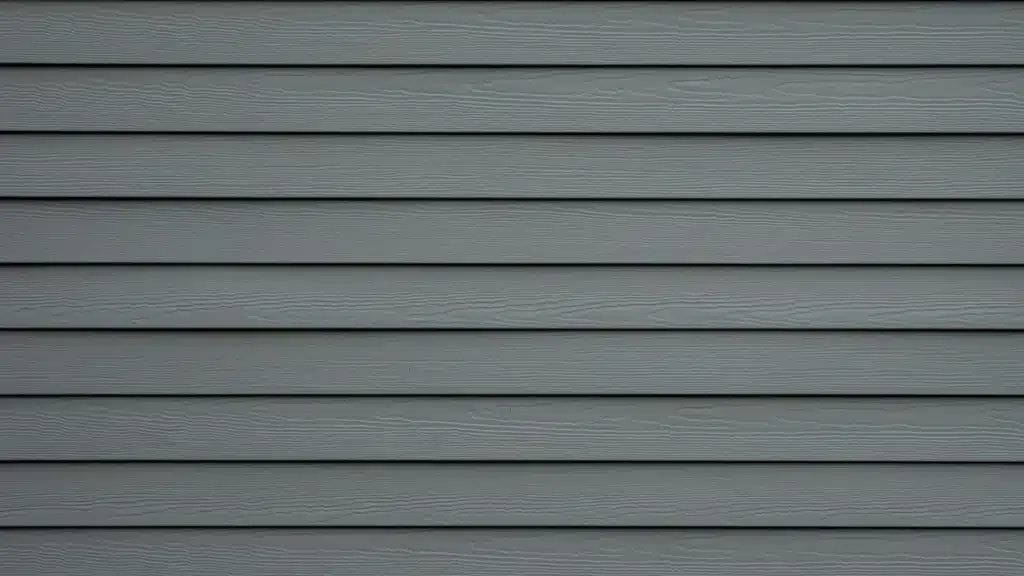
Hardboard and T1-11 often show up on older homes, additions, garages, sheds, and budget-built structures. These materials can become vulnerable in Seattle weather when coatings fail, lower edges absorb moisture, joints open, or maintenance is delayed.
Common warning signs include:
- swelling near the bottom edge;
- soft panels;
- delamination;
- peeling paint;
- dark staining;
- repeated patching;
- water damage around windows or trim;
- exposed edges that no longer hold finish.
KV Recommendation
When hardboard or T1-11 is failing in multiple areas, replacing it with fiber cement is usually a better long-term decision than patching scattered sections. This is especially true when the house is already showing dry rot, moisture intrusion, or broad paint failure.
Fiberglass Siding: Niche Option, Not a Default Seattle Recommendation
Fiberglass siding exists, and some homeowners compare it when researching durable exterior materials. It may offer certain performance advantages depending on the product, but it is less common, less familiar to many crews, and less central to the Seattle replacement market than fiber cement, cedar, vinyl, LP SmartSide, or metal.
KV Recommendation
Fiberglass should be considered only when the homeowner has a specific product reason, clear availability, and a contractor familiar with that system. For most KV replacement projects, James Hardie / fiber cement remains the more practical and proven recommendation.
Best Siding by Property Type
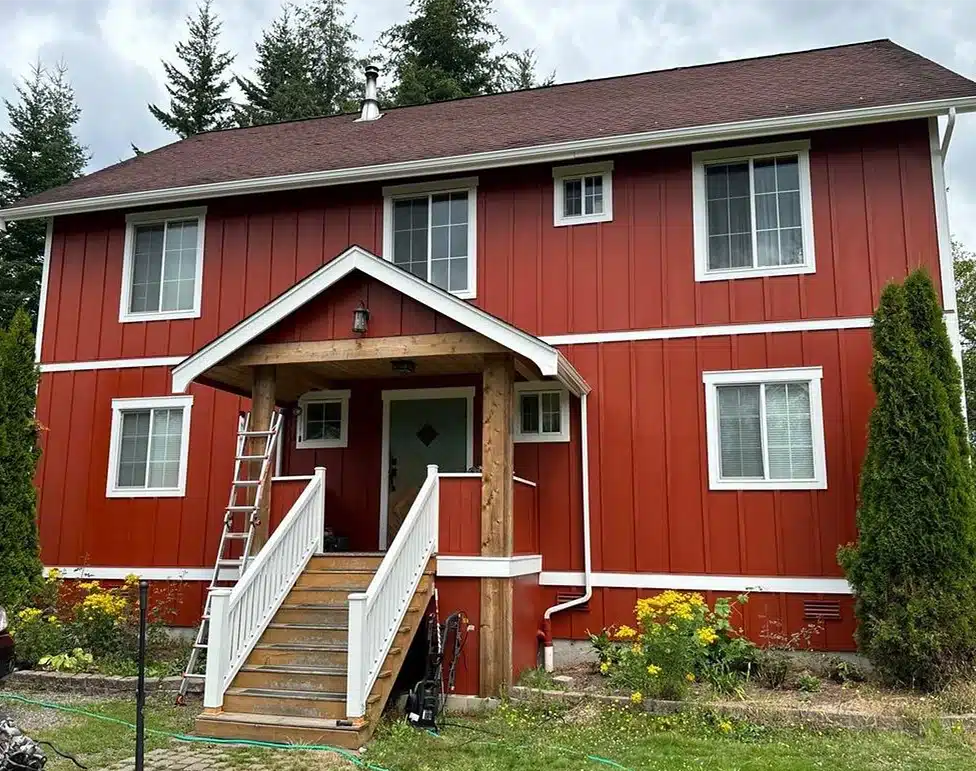
Different properties need different decisions. A custom Seattle home, a rental property, a duplex, an apartment building, and a commercial exterior should not all be evaluated the same way.
|
Property Type |
Best-Fit Direction |
Why It Works |
|
Seattle single-family home |
James Hardie / fiber cement with profile and color planning |
Strong balance of curb appeal, durability, moisture resistance, and resale value |
|
Older cedar home |
Fiber cement replacement with optional cedar accents |
Keeps warmth where desired while reducing full-house wood maintenance |
|
Rental property |
Fiber cement with simple durable trim and low-maintenance finish |
Reduces recurring maintenance and protects long-term asset value |
|
Duplex / townhome |
Fiber cement lap, panel, or shingle mix |
Durable, consistent, and visually strong across shared elevations |
|
Apartment / multifamily |
Fiber cement or carefully selected commercial-grade cladding system |
Good fit for property managers who need durability and predictable maintenance |
|
Modern remodel |
Smooth Hardie panels, vertical siding, lap siding, and possible metal accents |
Delivers clean architectural lines without turning the project into an experiment |
|
Coastal / high-exposure property |
Fiber cement with careful WRB, flashing, trim, and finish planning |
Helps manage wind-driven rain, moisture, and finish durability |
Best Siding If You Are Replacing Old Cedar
Many Seattle homeowners are not starting with a blank wall. They are replacing old cedar.
The decision usually comes down to this: do you want to maintain the character of cedar, or do you want to reduce the maintenance that came with cedar?
If the existing cedar has only minor wear and the homeowner loves maintaining wood, cedar replacement may still make sense. But if the home has widespread cupping, paint failure, soft boards, rot, or repeated patch history, fiber cement becomes a stronger option.
A good replacement strategy often looks like this:
- remove old cedar instead of covering it;
- inspect sheathing and trim for hidden moisture damage;
- repair dry rot before new siding goes on;
- install a proper weather-resistant barrier and flashing system;
- use HardiePlank, HardieShingle, HardiePanel, or a profile combination that matches the home’s style;
- add cedar selectively at the entry, soffit, posts, or architectural accents if the homeowner wants warmth.
This gives the home a more durable exterior without losing all natural character.
Best Siding If You Are Replacing Vinyl
Vinyl replacement often happens when the homeowner wants a more substantial exterior, better curb appeal, or a stronger long-term solution. Sometimes the vinyl is damaged. Sometimes it looks dated. Sometimes the homeowner suspects moisture problems behind it. Sometimes a remodel or resale plan raises the standard for the whole exterior.
When replacing vinyl, KV recommends thinking beyond the visible panels.
Ask:
- What is behind the vinyl?
- Was old siding covered instead of removed?
- Is the wall flat and sound?
- Are the windows and trim flashed correctly?
- Are there moisture stains or soft sheathing?
- Is the homeowner trying to upgrade value or just restore appearance?
For a full upgrade, fiber cement usually gives a more durable and premium direction than another vinyl layer.
Best Siding If You Are Replacing Stucco
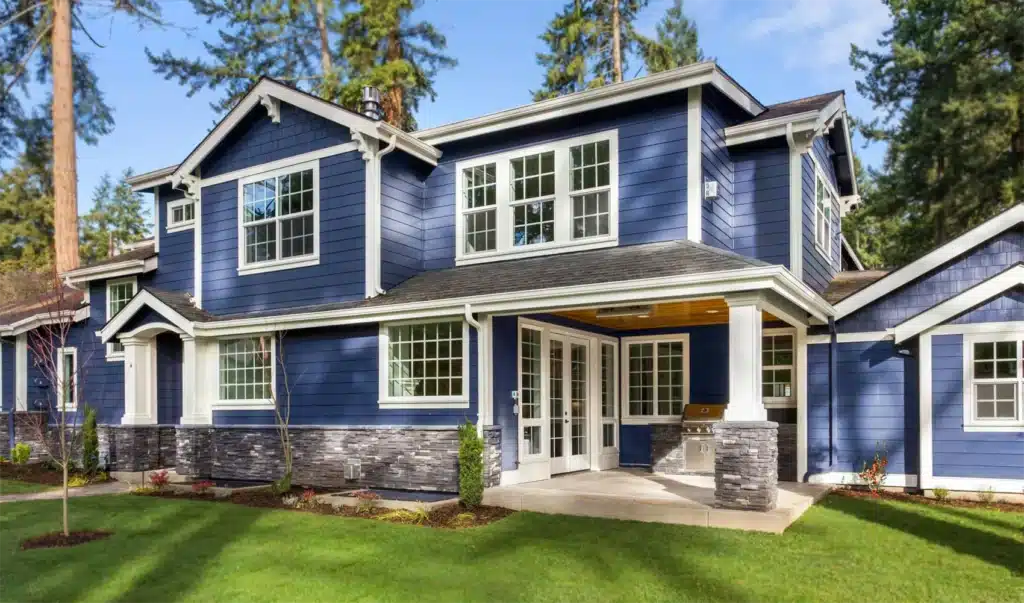
Replacing stucco is a bigger decision than swapping one siding product for another. It often involves moisture diagnosis, window and trim evaluation, sheathing inspection, and careful planning around transitions.
Fiber cement can be a strong replacement direction when the homeowner wants:
- a lighter-looking exterior;
- easier future maintenance;
- better access to inspect and repair the wall system;
- lap, shingle, panel, or board-and-batten style;
- reduced moisture risk compared with a weak stucco assembly;
- a more familiar Seattle siding replacement process.
The important step is not to cover moisture problems. The stucco system should be evaluated, removed as needed, and the wall should be corrected before new siding is installed.
Best Siding for Energy Efficiency
Siding alone is not the same as insulation. Homeowners often ask which siding is most energy efficient, but the better question is how the full wall assembly performs.
Energy performance can be affected by:
- air leakage;
- wall insulation;
- sheathing condition;
- WRB quality;
- exterior foam or rain-screen approach when used;
- window installation;
- soffit and attic ventilation;
- gaps around penetrations;
- thermal bridging;
- the condition of the existing wall before replacement.
Insulated vinyl can add some thermal value, but it does not automatically make it the best replacement choice for Seattle. Fiber cement can be part of an efficient exterior when paired with proper wall preparation, weather barrier, and window/trim integration.
For homeowners already replacing siding, this is the right time to inspect the wall, correct damage, improve flashing, and coordinate window replacement and siding integration if needed.
Best Siding Color and Finish Strategy for Seattle
Material choice and finish choice are connected. Seattle weather exposes paint, stain, and factory finishes to moisture, shade, UV, mildew pressure, and uneven drying.
For James Hardie / fiber cement, homeowners often compare:
- ColorPlus Technology for factory-applied color consistency and reduced jobsite painting complexity;
- primed Hardie when the homeowner wants a custom paint palette or specific design coordination;
- smooth panels or smooth lap siding for modern homes;
- Cedarmill texture for a more traditional wood-grain look;
- HardieShingle accents for Craftsman, gable, coastal, or cottage-style detail;
- board-and-batten for farmhouse or modern vertical design.
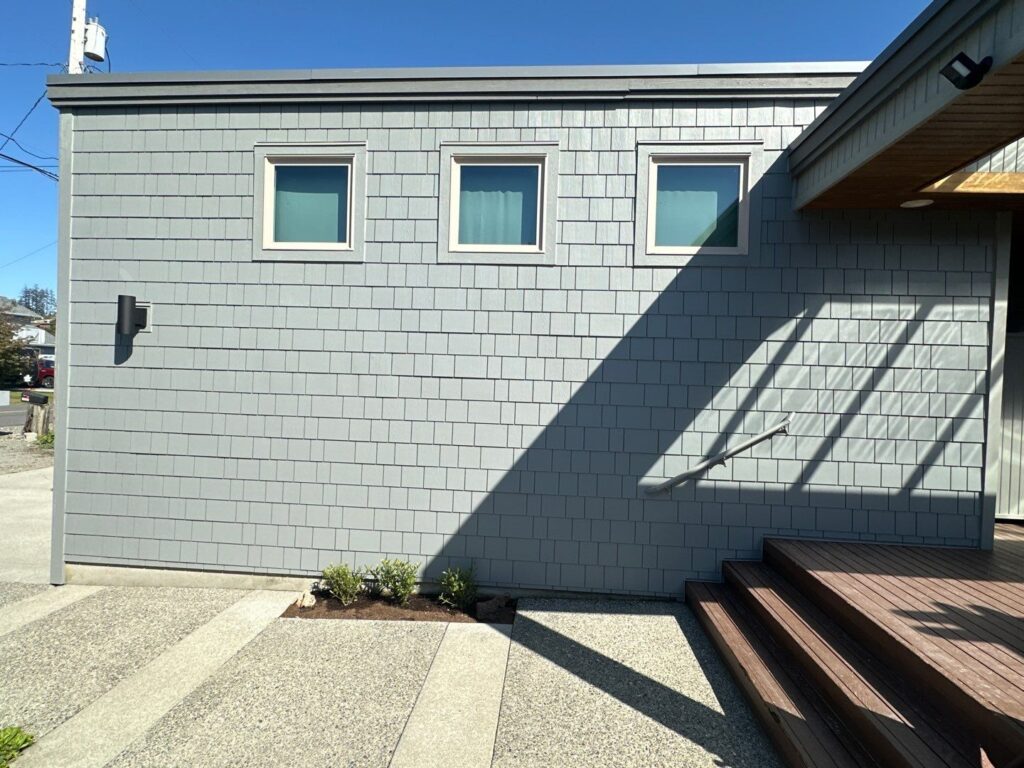
A 4th Ave Seattle project is a strong proof example for color and trim planning: KV installed James Hardie Gray Slate from the Statement Collection with Arctic White trim and soffits. That kind of project helps homeowners visualize how material, color, trim, and soffit details work together.
Why the Cheapest Siding Bid Can Be Expensive in Seattle
The cheapest siding bid is not always the lowest-cost outcome.
A low bid may leave out:
- full old-siding removal;
- sheathing replacement;
- dry rot repair;
- proper WRB;
- flashing details;
- premium sealant;
- trim replacement;
- window integration;
- soffit work;
- paint quality;
- owner supervision;
- consistent crew management;
- warranty support.
In a dry climate, some shortcuts may take longer to show. In Seattle, shortcuts often show up as paint failure, soft trim, leaks, swelling, open joints, or hidden rot.
KV’s position is simple: high-quality siding replacement should be competitively priced, but it should not be cheap because the important layers were skipped. KV offers a price-match guarantee in the right context, but the comparison has to be the same scope and same quality standard – not a lower bid that omits water-management work.
Installation Details That Matter More Than Most Homeowners Realize
A siding material comparison is useful, but the best material will still fail if the installation is weak. In the Pacific Northwest, the most important siding decisions often happen behind the finished surface.
Weather-Resistant Barrier
The WRB is not decoration. It is part of the wall’s water-management system. It needs correct laps, transitions, penetration handling, and integration with flashing.
Flashing
Flashing protects high-risk areas: windows, doors, trim caps, belly bands, horizontal ledges, decks, blocks, and roof intersections. Bad flashing can defeat good siding.
Clearances
Siding needs proper clearance from roofing, decks, grade, concrete, and other surfaces. Too little clearance can lead to moisture wicking, staining, swelling, or premature finish issues.
Trim Integration
Trim is not just a decorative border. Around windows, doors, corners, fascia, and transitions, trim can either shed water correctly or trap it.
Sealant
Sealant should be used strategically, not as a substitute for flashing. KV emphasizes premium sealant discipline, including Quad Max standards where appropriate, because cheap or inconsistent sealant can fail early in wet weather.
Sheathing and Dry Rot Repair
If the wall is soft behind the old siding, new siding should not cover it. Dry rot, damaged sheathing, and compromised framing must be addressed before the exterior is closed.
Repair vs Replacement: When a Material Problem Is Really a System Problem
Some homeowners start with a small question: “Can you replace a few boards?”
When homeowners compare siding repair vs replacement, a small repair sometimes makes sense. But many siding problems are not isolated. A few damaged boards may be the visible symptom of a larger exterior envelope issue.
Full replacement should be considered when:
- multiple elevations show failure;
- trim and siding are failing together;
- old cedar, hardboard, or T1-11 is soft in many areas;
- paint failure keeps returning;
- window leaks are present;
- there are signs of dry rot;
- siding has been patched many times;
- the homeowner wants a long-term solution rather than repeated repairs;
- the project involves property value, resale, rental maintenance, or insurance concerns.
KV is not the best fit for very small patch jobs or a few boards here and there. KV is the right fit when the exterior needs a serious replacement plan, moisture-aware repair, or a larger siding system correction.
Material Recommendations by Homeowner Goal
|
Homeowner Goal |
Best Direction |
Why |
|
Long-term low-maintenance replacement |
James Hardie / fiber cement |
Strong durability, lower maintenance than cedar, good design flexibility |
|
Keep some natural warmth |
Fiber cement with cedar accents |
Reduces full-house wood maintenance while preserving warmth at entries or soffits |
|
Lowest upfront price |
Vinyl |
Lower initial cost, but compare long-term value and appearance carefully |
|
Modern architectural look |
Smooth Hardie panels, vertical siding, metal accents |
Clean lines without abandoning weather-focused detailing |
|
Rental property durability |
Fiber cement with simple trim and predictable finish |
Better fit for owners who want fewer recurring maintenance issues |
|
Replace failing T1-11 or hardboard |
Fiber cement |
Better long-term moisture and appearance profile |
|
Replace questionable stucco |
Fiber cement after wall evaluation |
Allows moisture diagnosis and a more familiar PNW drainage strategy |
|
Preserve historic wood character |
Cedar or fiber cement profile match |
Depends on maintenance tolerance and historic requirements |
What to Ask Before Choosing a Siding Material
Before choosing a material, ask the contractor these questions:
- Will the old siding be removed, or are you planning to cover it?
- How will you inspect sheathing and dry rot?
- What weather-resistant barrier will be used?
- How will window and door flashing be handled?
- How will trim be integrated with the drainage plane?
- What clearances are required for this product?
- What sealant will be used and where?
- What happens if hidden rot is discovered?
- Is the crew experienced with the material?
- Who manages the project day to day?
- Is the same crew staying on the job?
- What workmanship warranty is provided?
- Does the manufacturer warranty depend on installation requirements?
These questions reveal whether the project is being treated as a full exterior system or just a material swap.
Why KV Often Recommends James Hardie for Seattle Homes
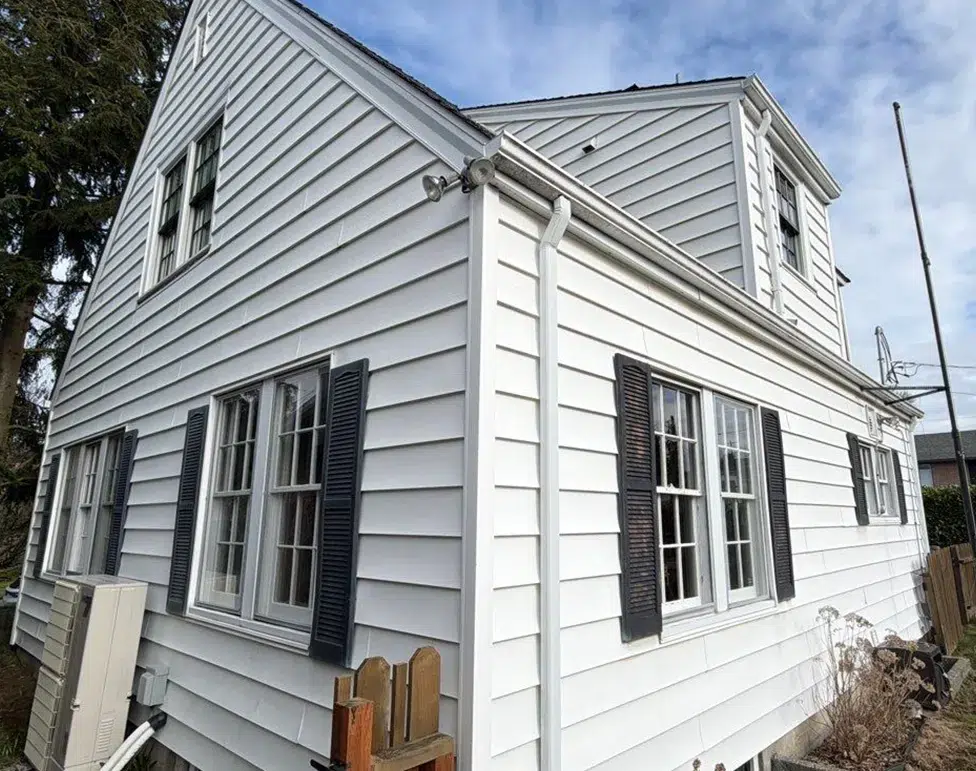
KV Construction often recommends James Hardie / fiber cement because it fits the company’s strongest work: full siding replacement, fiber cement installation, James Hardie products, PNW waterproofing, trim and flashing integration, and owner-managed quality control.
The recommendation is not based on a single product feature. It is based on the whole replacement equation:
- strong durability for wet weather;
- lower maintenance than cedar;
- strong curb appeal;
- multiple profiles and textures;
- ColorPlus and primed options;
- lap, shingle, panel, soffit, trim, and board-and-batten possibilities;
- good fit for single-family homes, duplexes, rentals, apartments, and commercial properties;
- manufacturer warranty support when installed correctly;
- compatibility with KV’s 5-Year Workmanship Warranty;
- strong fit with the company’s consistent crews and direct owner involvement.
A material can look good on paper. A siding replacement should perform on the house.
Project Proof: How Material Decisions Look on Real KV Jobs
For more local examples, review KV’s Seattle siding projects before comparing materials, finishes, and waterproofing details.
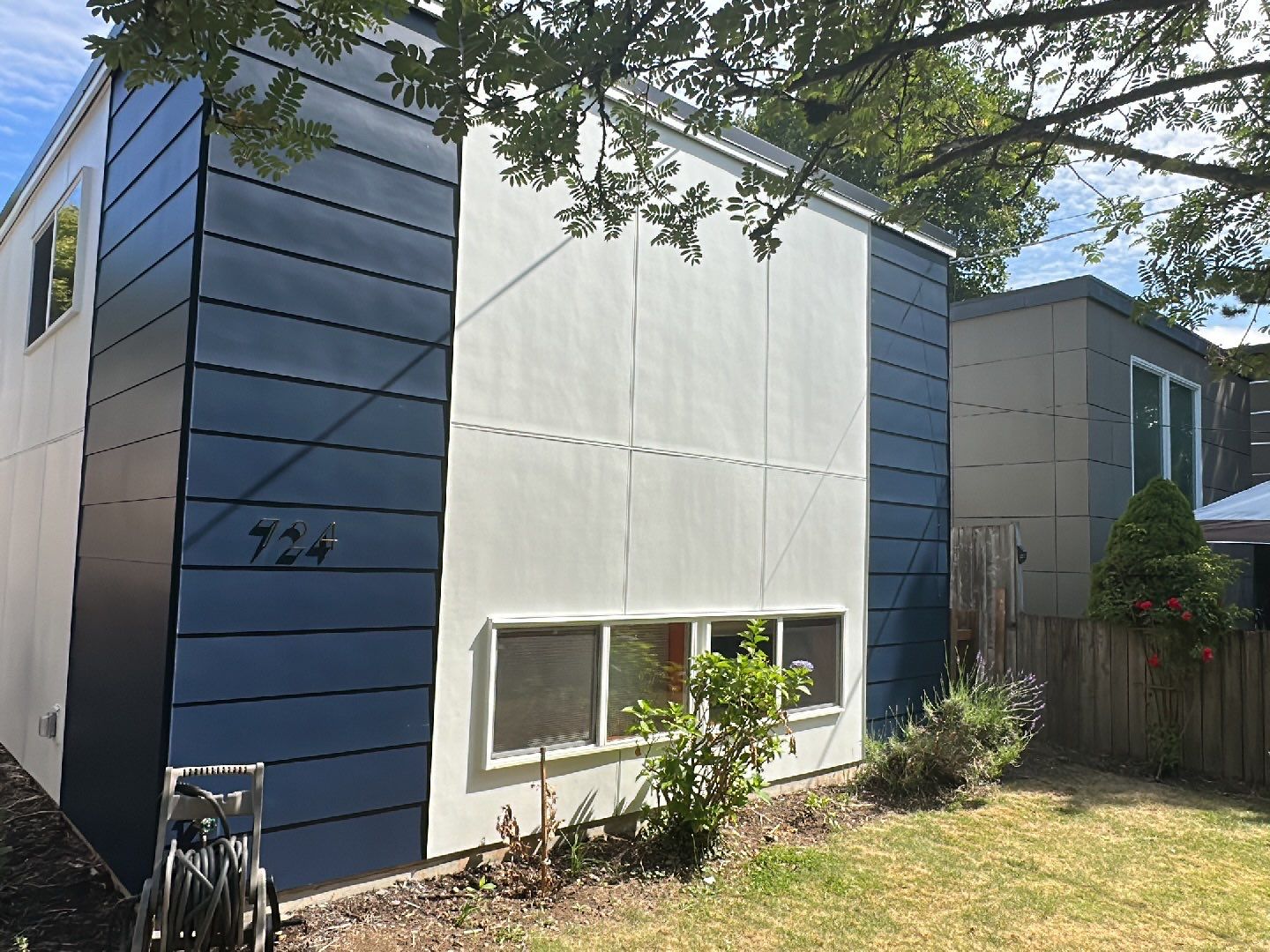
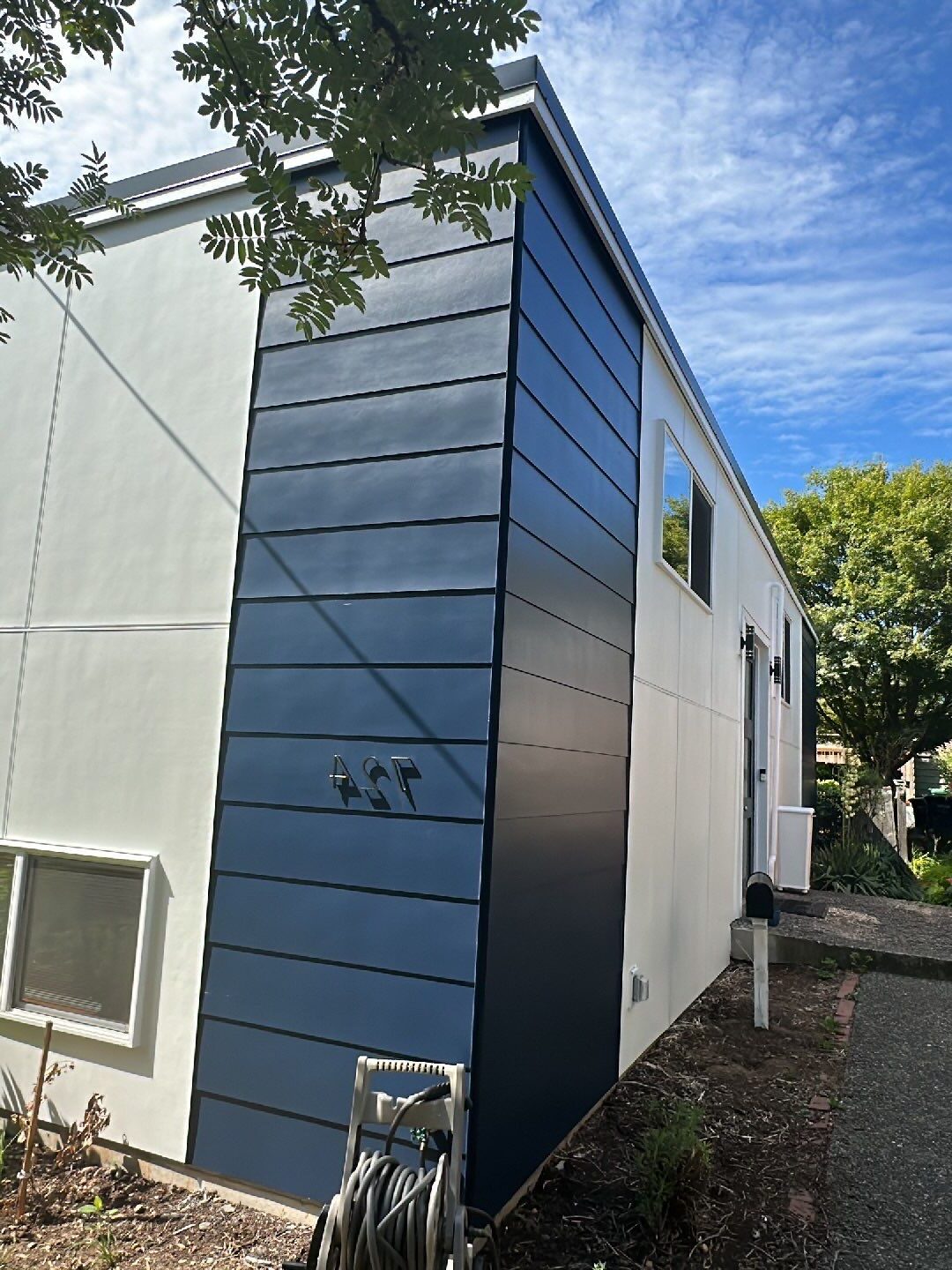
Phinney Ridge modern siding installation - Modern Hardie Panel and Lap Siding
This project is ideal proof for homeowners who want a modern look. Smooth Hardie panels, smooth lap siding, HydroGap drainable housewrap, X-metal outside corners, and a premium finish helped create a clean contemporary exterior with durable PNW protection.
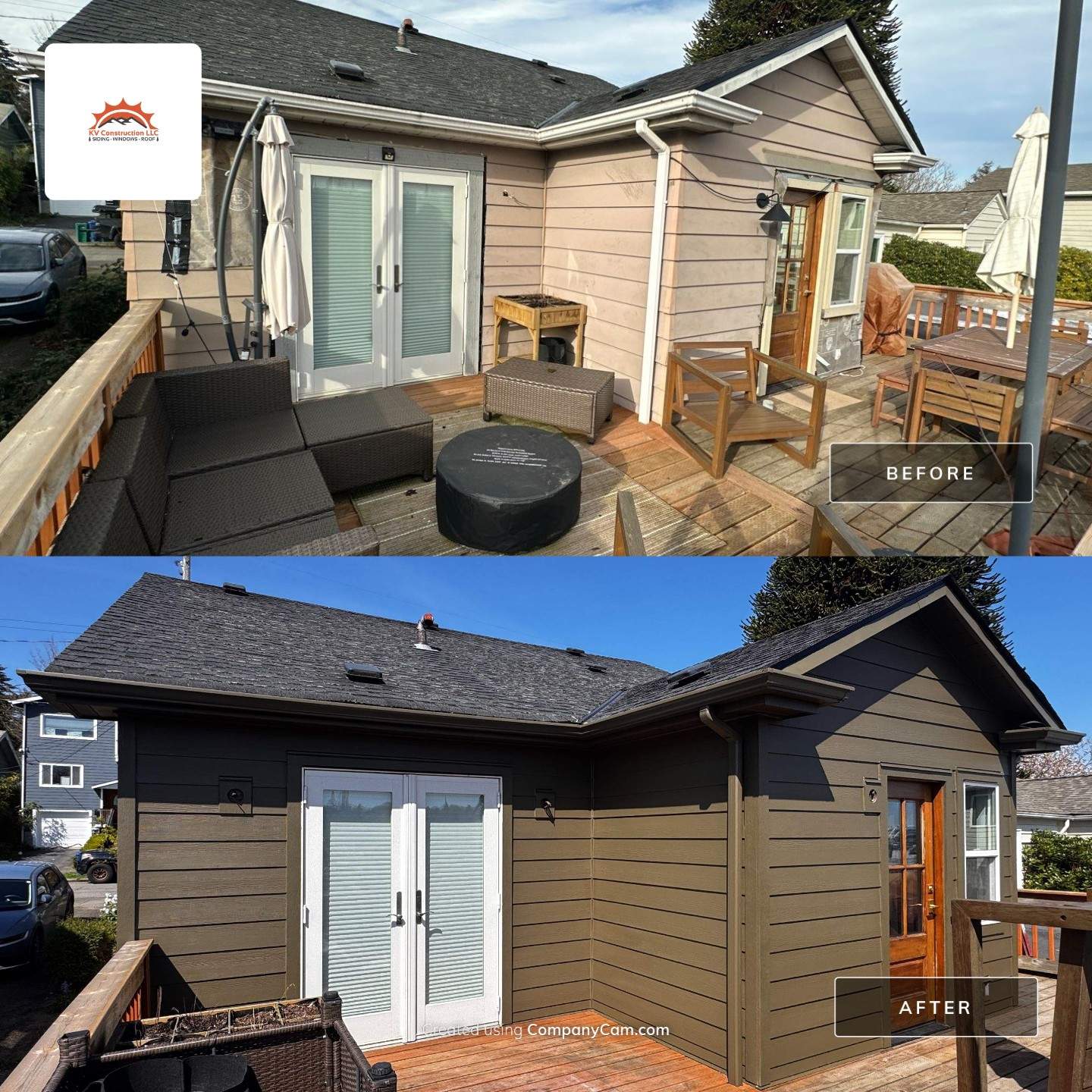
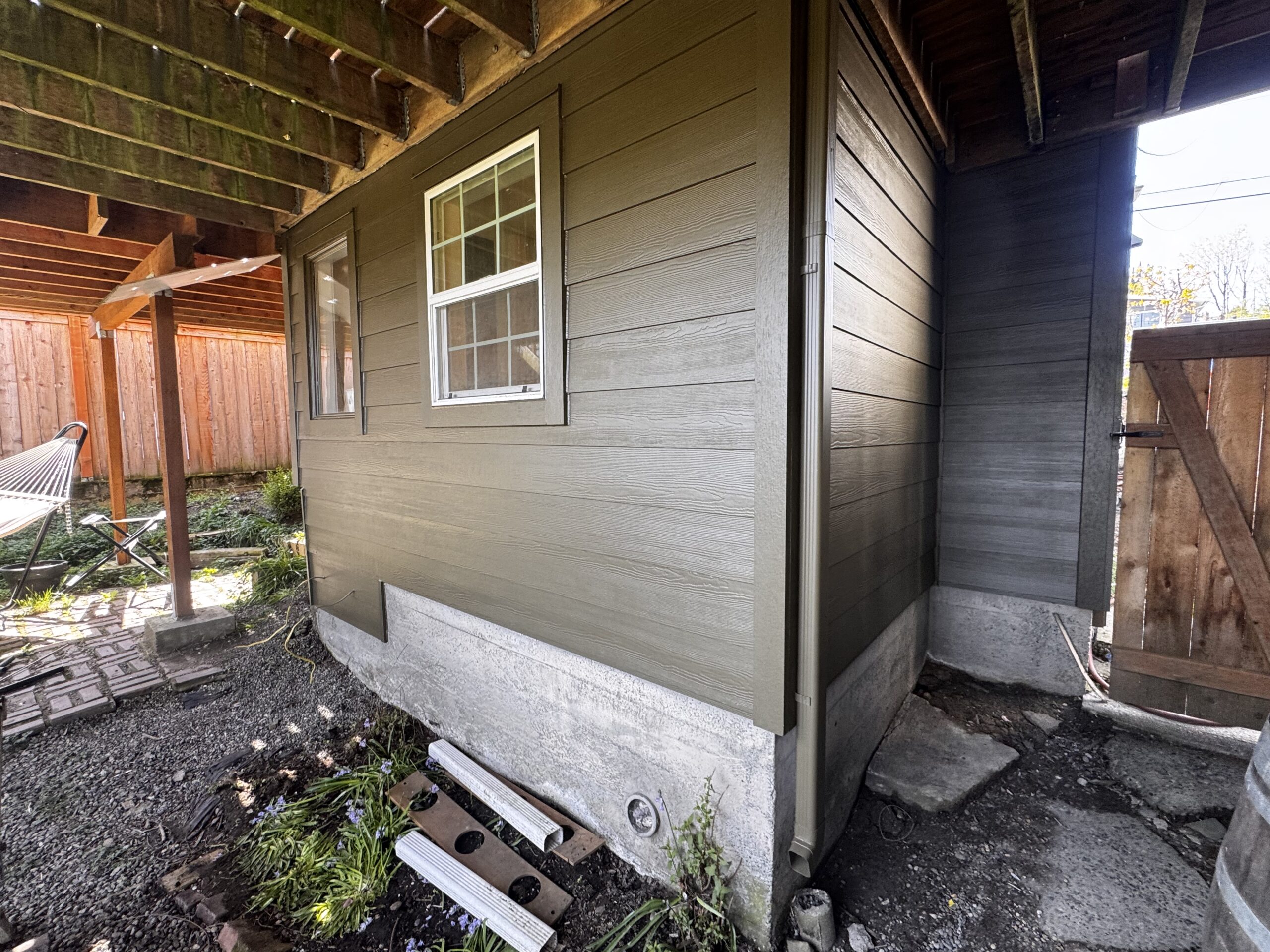
West Seattle Hardie and cedar exterior remodel - Cedarmill With Cedar Accents
This project is ideal proof for homeowners comparing cedar vs fiber cement. KV used 8 1/4-inch James Hardie Cedarmill lap siding, HardieShingle gables, cedar accents, Hardie Weather Barrier, and OSB sheathing. It shows how the warmth of wood can be used without making the entire exterior a high-maintenance cedar system.
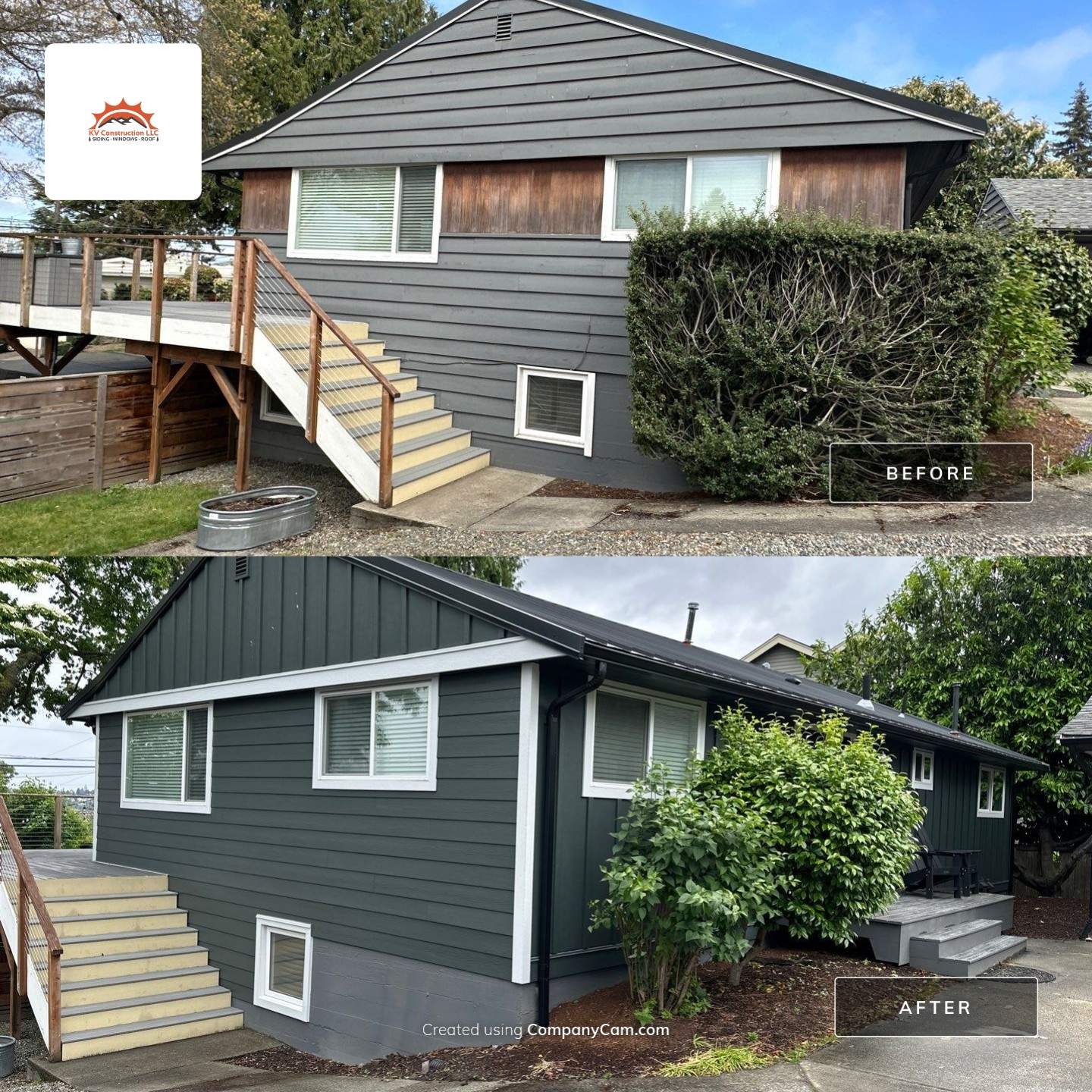
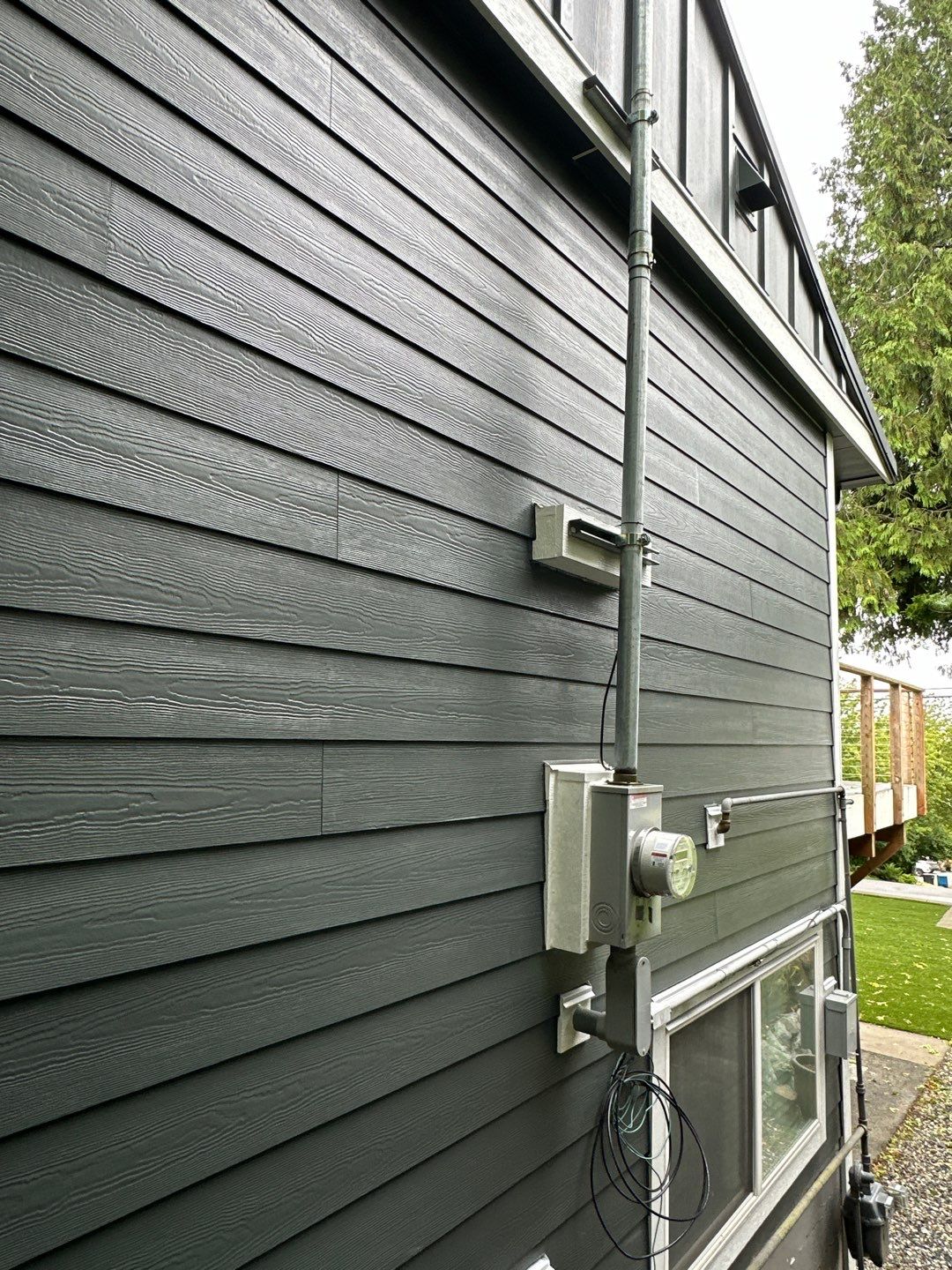
Mercer Island board-and-batten Hardie project - Lap Siding, Flashing, and Moisture Protection
This project is useful proof for homeowners who want a farmhouse or mixed-profile look. KV combined horizontal and vertical Hardie fiber cement siding, trim, soffits, paneling, and flashing details to improve appearance and moisture protection.
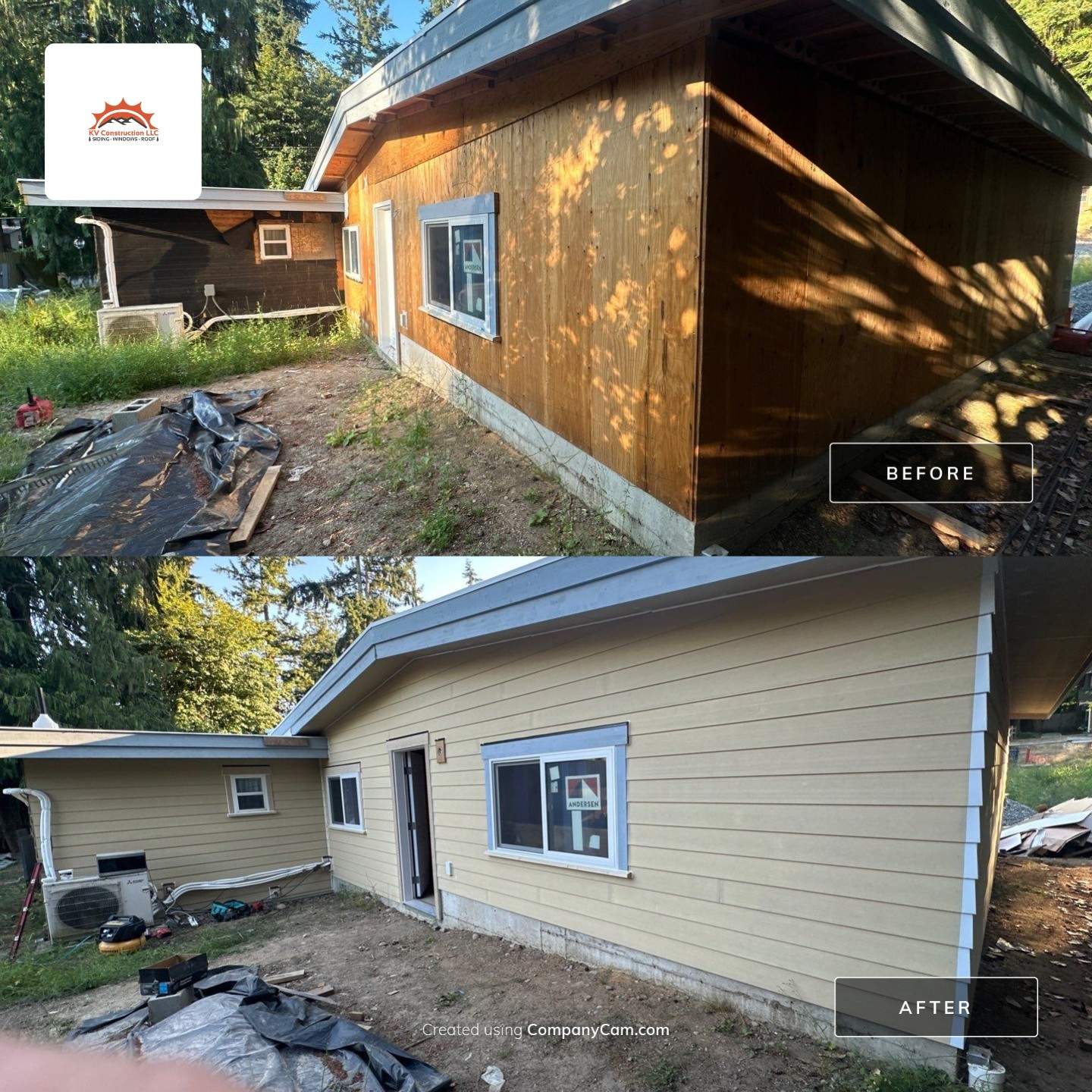
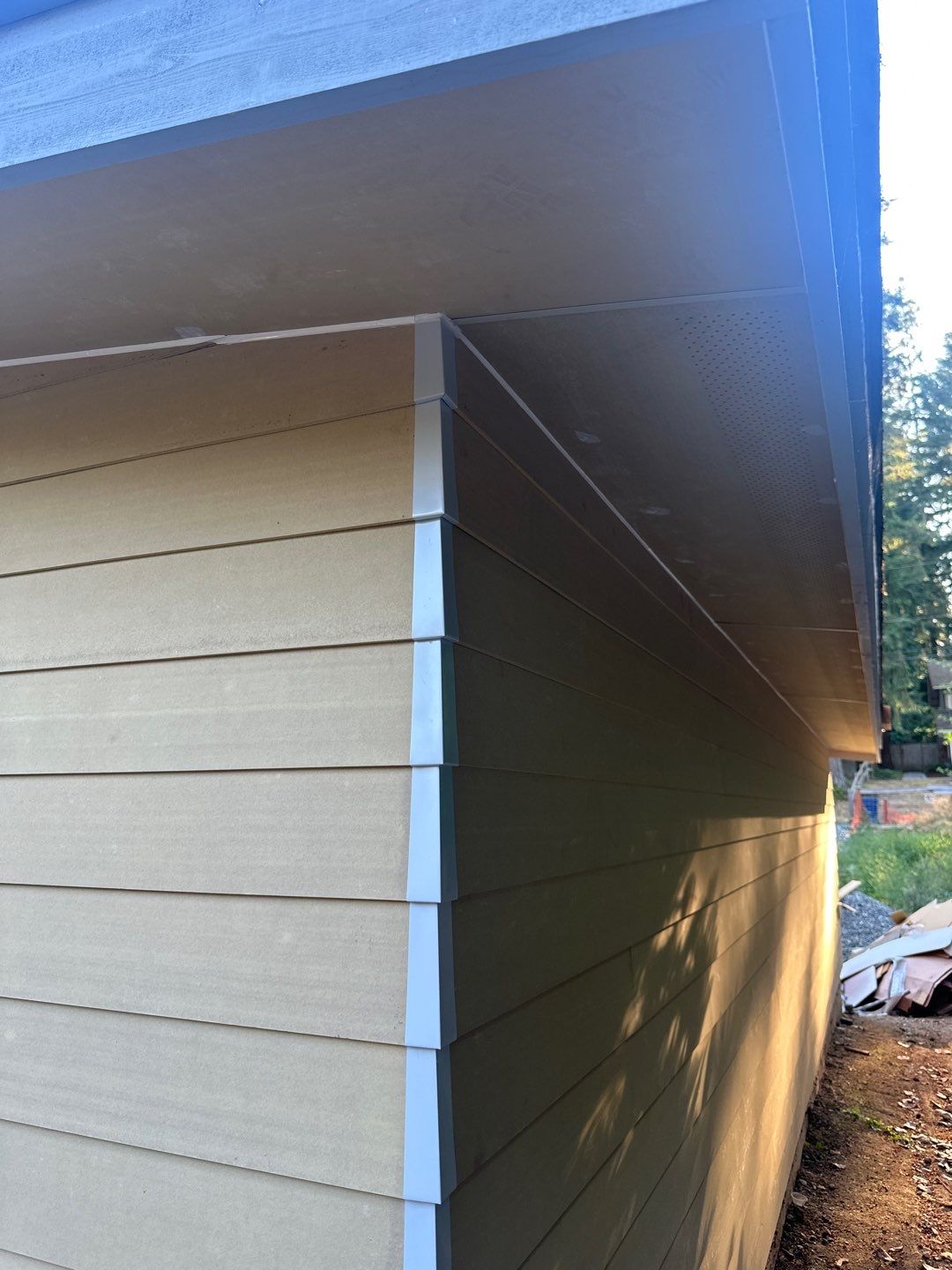
Everett Hardie siding remodel - HZ10 Hardie and Vented Soffit Planning
This project shows why product line, soffit, and ventilation details matter. KV installed primed James Hardie HZ10 fiber cement siding and pre-vented HardieSoffit as part of a durable, low-maintenance exterior package.
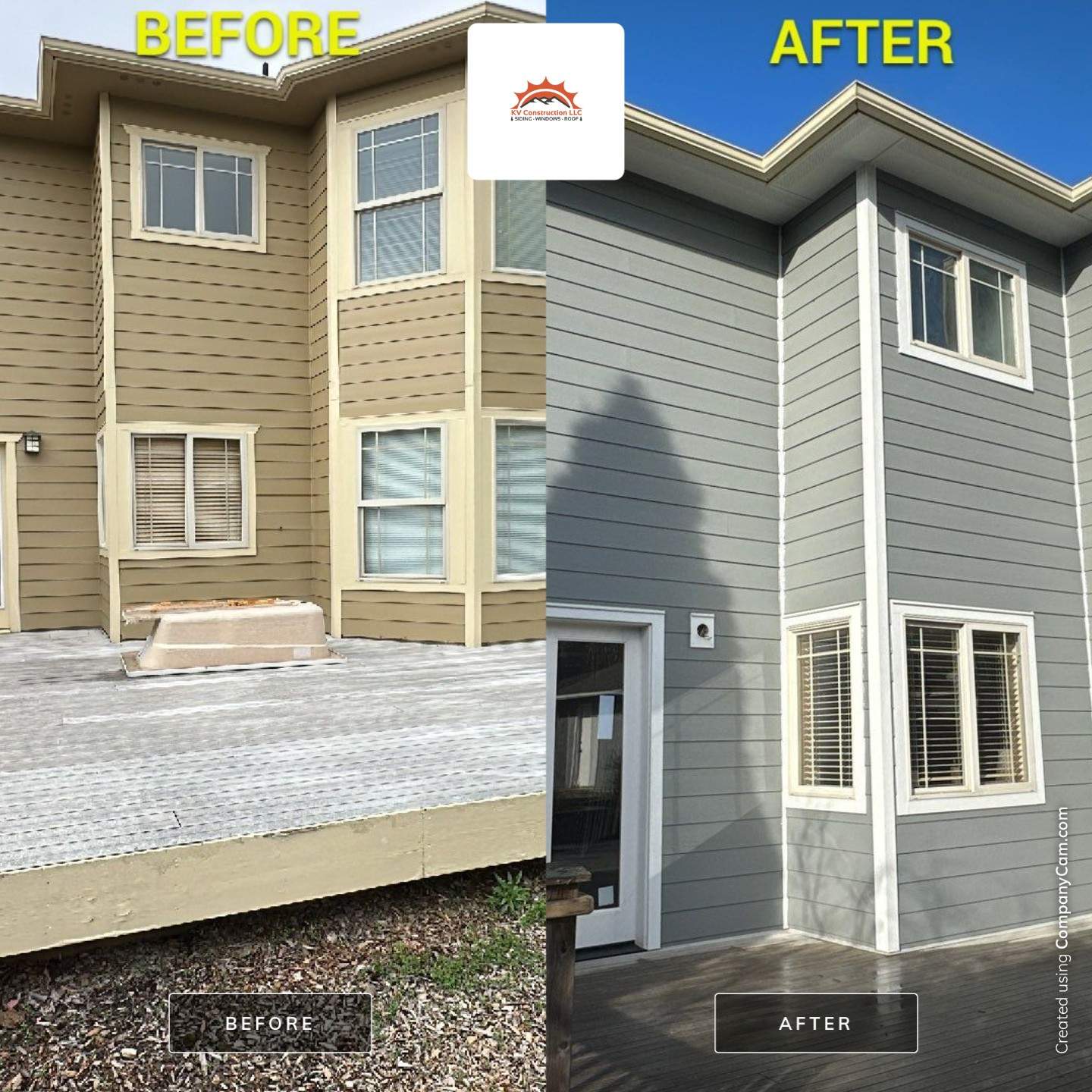
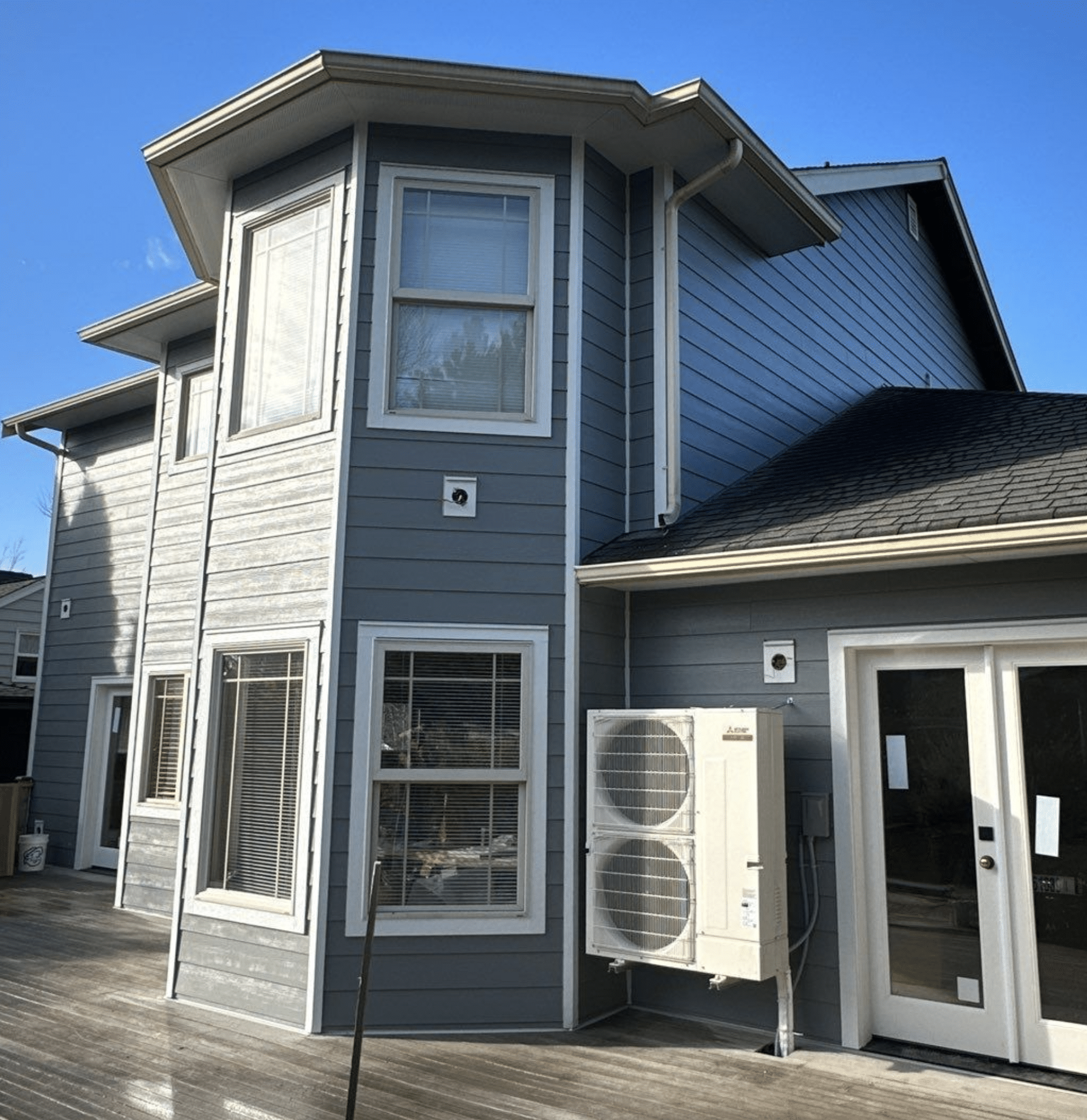
4th Ave Seattle ColorPlus siding project - Gray Slate ColorPlus With Arctic White Trim
This project is a strong proof example for homeowners comparing finish options. Gray Slate ColorPlus siding with Arctic White trim and soffits shows how a fiber cement exterior can feel polished, durable, and visually complete.
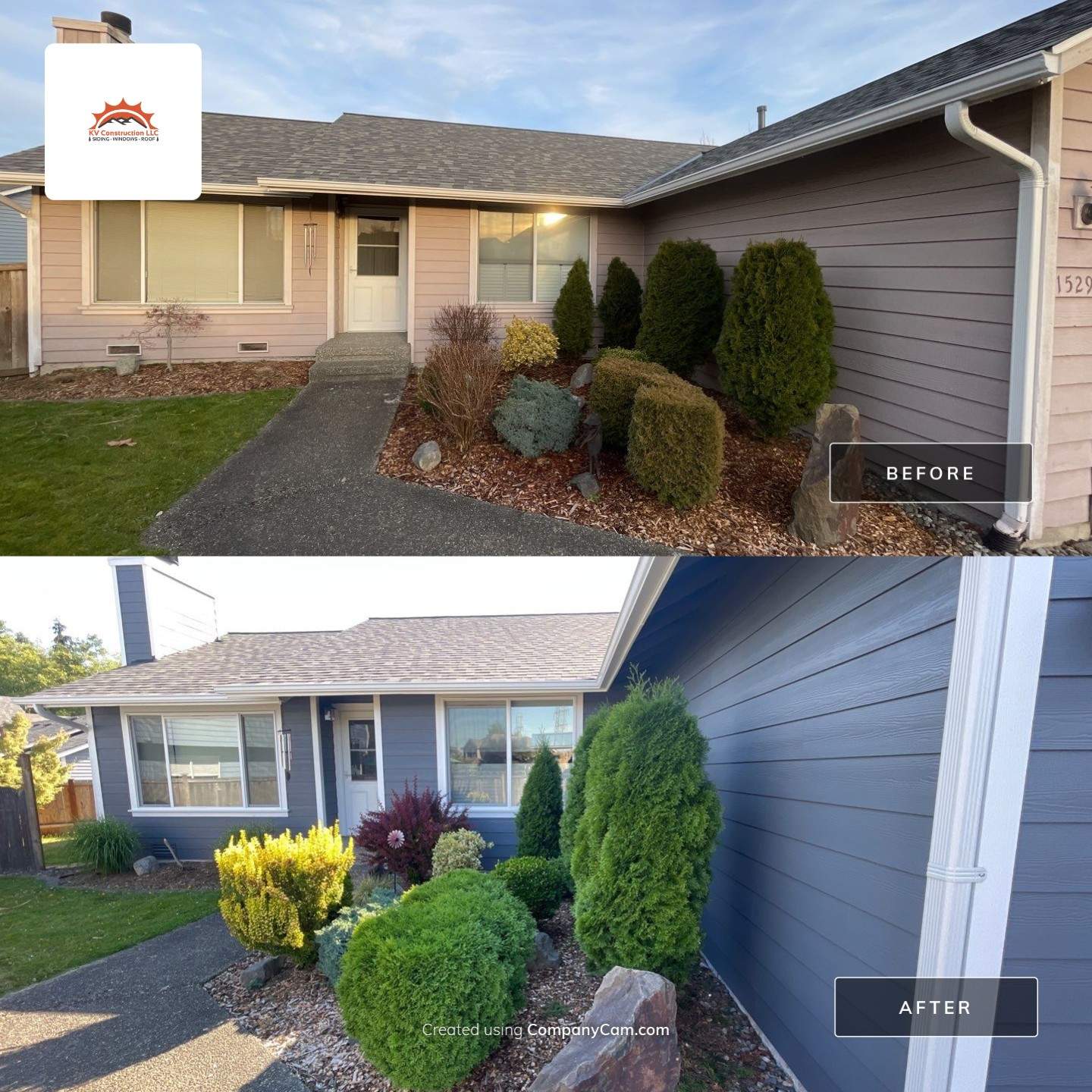
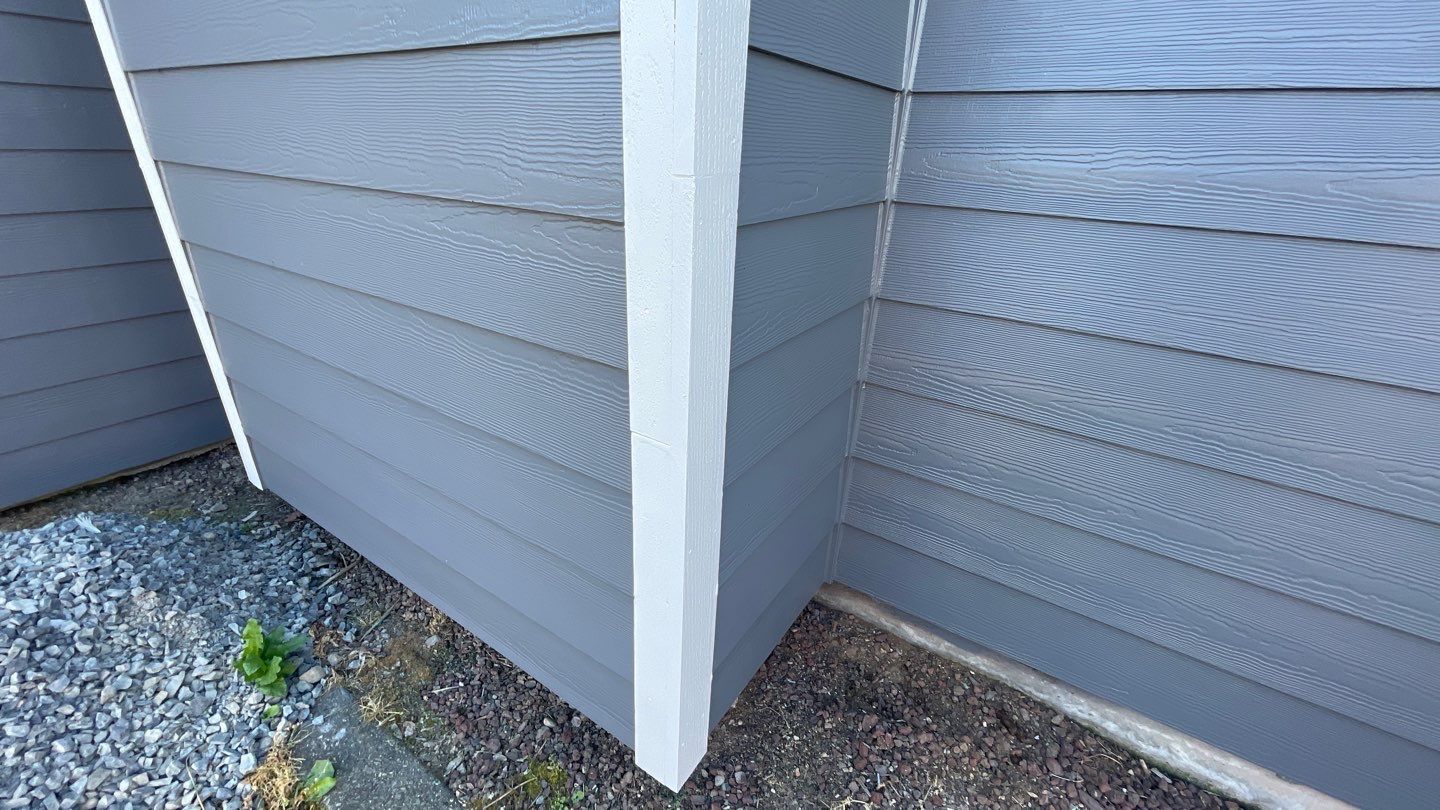
Lake Stevens Hardie siding project - HardiePlank and HardieShingle for Moisture-Heavy Conditions
This project is useful for homeowners in Lake Stevens, Everett, Granite Falls, Arlington, and other moisture-heavy service areas. The combination of HardiePlank lap siding, HardieShingle accents, WeatherSmart barrier, Z-metal flashing, and trim details shows the importance of pairing material selection with waterproofing.
Final Recommendation
For Seattle and the Pacific Northwest, the best siding material is usually the one that gives the homeowner the strongest combination of moisture performance, maintenance control, design fit, warranty support, and installation reliability.
For most KV-fit full siding replacement projects, that points to James Hardie / fiber cement siding.
Cedar can be beautiful. Vinyl can be budget-friendly. LP SmartSide can be a serious engineered wood alternative. Metal can be excellent for specific modern designs. Stucco and masonry can work when detailed properly. But when the goal is a durable full exterior replacement for Seattle weather, fiber cement is usually the best starting point.
The product matters. The crew matters more. The waterproofing details matter most.
KV Construction brings direct owner involvement, consistent crews, James Hardie specialization, EPA Lead-Safe certification, PNW waterproofing discipline, a 5-Year KV Workmanship Warranty, and a calm, practical process from inspection to final walkthrough.
For location-specific guidance, review KV’s Everett siding contractors, Lake Stevens siding contractors, and Granite Falls siding contractors pages.
Ready to compare siding materials for your home or property? Request a Free Siding Consultation with KV Construction.
Ready to compare siding materials for your home or property?
Request a Free Siding Consultation with KV Construction.
FAQ
What is the best siding material for Seattle weather?
For most full siding replacement projects in Seattle, James Hardie / fiber cement siding is usually the best overall choice because it offers strong durability, lower maintenance than cedar, design flexibility, and good performance in rainy Pacific Northwest conditions when installed correctly.
Is fiber cement better than vinyl siding in Seattle?
For many Seattle homeowners, yes. Vinyl can be lower in upfront cost, but fiber cement usually provides a more substantial exterior, stronger curb appeal, better design flexibility, and a better fit for long-term full siding replacement.
Is cedar siding a good choice in the Pacific Northwest?
Cedar can be beautiful and appropriate for some homes, but it requires consistent maintenance. In Seattle’s wet climate, neglected cedar can discolor, cup, split, lose coating protection, or develop moisture-related issues. KV often recommends using cedar as an accent with fiber cement as the main siding.
Is LP SmartSide better than James Hardie?
LP SmartSide can be a strong engineered wood option, especially for homeowners who want a wood-based product. James Hardie / fiber cement is usually KV’s preferred recommendation for Seattle replacement projects because it aligns with the company’s fiber cement specialization, waterproofing process, and long-term PNW durability focus.
Is metal siding good for Seattle homes?
Metal siding can be a good option for modern accents, commercial-style designs, and certain architectural projects. It is not always the best default for full-house residential replacement because panel type, finish, fasteners, dent resistance, thermal movement, and installation details matter.
Should I replace stucco with fiber cement siding?
If stucco has recurring cracks, leaks, moisture concerns, or poor drainage details, replacing it with fiber cement may be worth considering. The wall should be evaluated carefully before new siding is installed so hidden moisture problems are not covered.
What siding is best for rental properties or multifamily buildings?
Fiber cement is often a strong choice for rental properties, duplexes, apartments, and multifamily buildings because it offers durability, lower maintenance than wood, and a clean appearance that can support long-term asset value.
Is T1-11 siding good for Seattle homes?
T1-11 is not usually the best long-term siding choice for high-value Seattle full replacements. If it is swelling, soft, delaminating, or repeatedly failing at the bottom edges, replacing it with fiber cement is often a better option.
Does siding improve energy efficiency?
Siding alone is not insulation. Energy performance depends on the whole wall assembly, including air leakage, insulation, sheathing, weather barrier, windows, and installation quality. A siding replacement is a good time to inspect and improve the exterior wall system.
Is ColorPlus James Hardie better than primed Hardie?
ColorPlus can be a good choice when the homeowner wants a factory-applied finish and the desired color is available. Primed Hardie can be better when the project requires a custom paint color. Both still require correct installation, flashing, and handling.
Can I replace only one side of my house?
Sometimes one-elevation replacement makes sense, especially when damage is isolated. But if multiple walls show failure, repeated patching may be a short-term fix for a larger siding system problem. KV is best suited for larger replacement and exterior envelope work, not tiny patch jobs.
What should I ask a siding contractor before choosing a material?
Ask whether old siding will be removed, how sheathing and rot will be inspected, what WRB will be used, how flashing will be handled, what clearances are required, who manages the project, whether the crew is consistent, and what workmanship warranty is provided.