
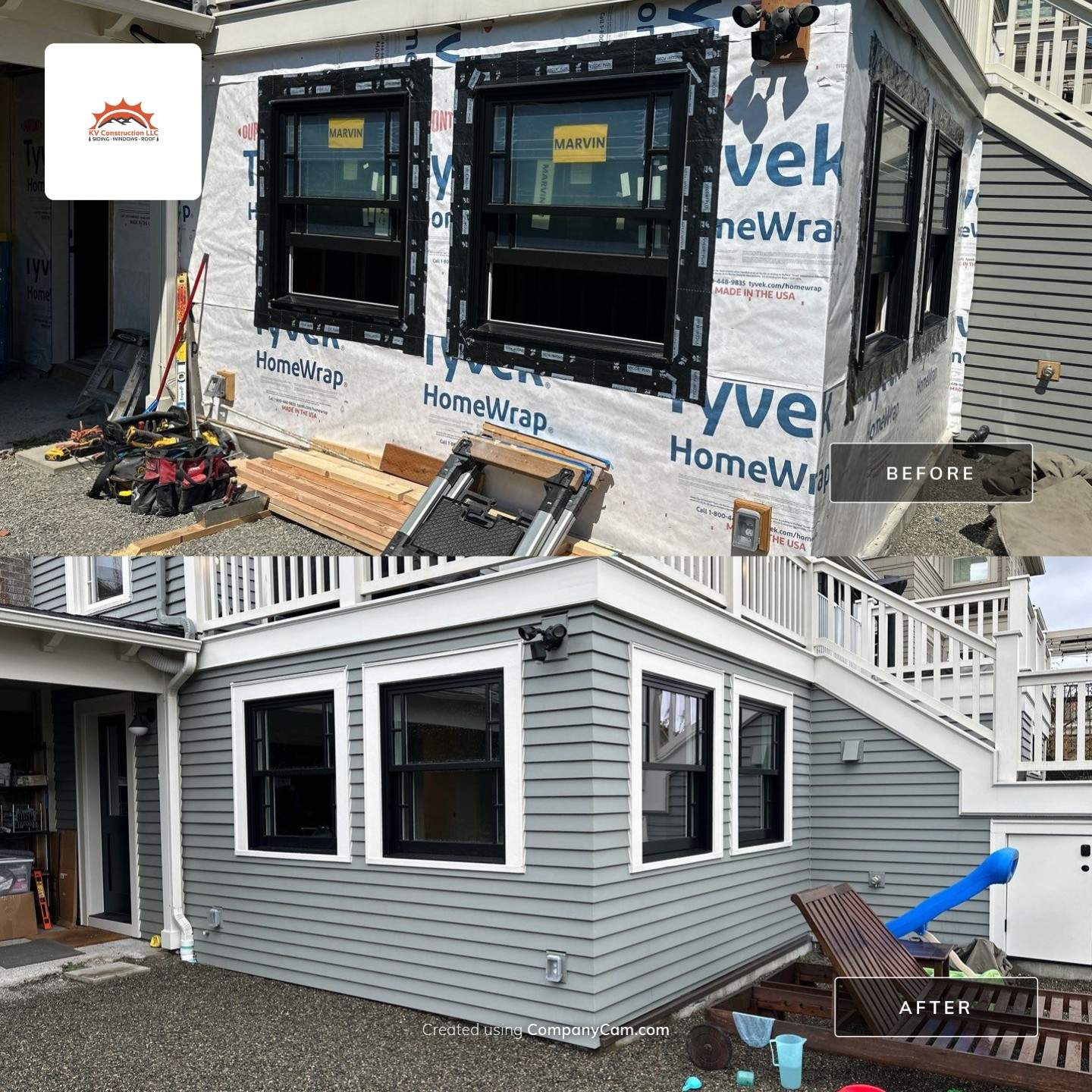
Two siding estimates can describe the same house and still cover very different work. One may include removal, trim, painting, and disposal. Another may leave several of those items for a later decision. Before comparing the totals, make sure you can compare the actual scope.
For a Seattle home, that conversation should include the parts of the exterior that affect both appearance and moisture protection. KV Construction’s approach to siding replacement in Seattle considers the existing wall, openings, trim, and finish together. The checklist below helps you ask clear questions before approving a proposal.
1. Identify every wall and component included
A useful proposal starts with boundaries. Does the price cover the entire house, selected elevations, a garage, or a detached structure? Ask the contractor to identify those areas in writing and explain what happens at the edges of the work.
Then review the components: siding, corner boards, window and door trim, fascia, soffits, decorative bands, mounting blocks, and any architectural accents. Seattle’s Craftsman homes, split-level houses, and contemporary exteriors can have very different detail requirements. A phrase such as “new siding” leaves too much room for assumptions.
For an overview of how these pieces fit into a larger project, see our complete siding replacement guide.
2. Confirm removal, preparation, and concealed-damage procedures
Ask what existing materials will be removed, how debris will be handled, and which preparation tasks are included. If the contractor expects multiple siding layers or areas that require further assessment, the proposal should describe those expectations.
Some wall conditions become clear only after removal. Ask how photographs, findings, repair recommendations, and additional pricing will be presented if damaged sheathing or framing is uncovered. Understand any allowance or unit price and who must approve additional work.
The key question is practical: “How will I know what changed, what it costs, and how it affects the schedule before the extra work proceeds?” Washington’s Department of Labor & Industries recommends a written contract and written changes to the material or scope in its Hire Smart homeowner guidance.
3. Specify materials and the finished appearance
Record the siding manufacturer, product, profile, texture, color, and finish choice. Ask whether the proposal includes factory-finished materials or primed siding with site-applied paint. Confirm the trim selections and any accent areas separately.
Photographs help make those choices concrete. Browse completed Seattle siding projects to discuss the appearance you want, then check that the written proposal names the products and details needed for your house.

4. Discuss openings, weather protection, and older materials
Ask the contractor to explain the proposed weather barrier and flashing work in plain language. Which window, door, roof-to-wall, or other transitions are included? Which existing components will remain? The answers should help you understand the project without requiring you to design the installation.
If a window also needs attention, decide whether that work belongs in the same scope. Our window replacement services provide a starting point for that discussion. Keeping or replacing a window should be an explicit decision before the siding proposal is finalized.
For an older exterior with possible lead-painted materials, ask how the condition will be evaluated and addressed within the project. Review KV Construction’s lead-paint exterior services and discuss the appropriate scope directly with the team.
5. Assign finish work and site responsibilities
Confirm who is responsible for painting, preparation, touch-ups, sealant work, and cleanup. If you choose primed siding, the painting scope should be clear. If you choose a factory finish, ask how handling marks and any required touch-ups will be addressed.
Seattle properties can also present narrow side yards, sloped access, closely spaced neighbors, or limited parking. Discuss scaffolding access, material storage, debris containers, landscape protection, and the routes your household will use. Put special arrangements in writing so everyone works from the same expectations.
6. Understand scheduling, payments, and completion
Ask who will communicate with you, how updates will arrive, and how weather or newly discovered conditions may affect the sequence. For a November project, discuss which activities depend on suitable conditions, including coating work. A useful schedule explains dependencies and how changes will be communicated.
Review the payment schedule alongside the scope. Confirm the total, applicable taxes and fees, any stated allowances, exclusions, and what each payment corresponds to. Make sure you understand how approved additions will be documented and billed.
Finally, ask what you will receive at completion: a walkthrough, a record of outstanding items, product information, care guidance, and the applicable written warranties. Request separate explanations of manufacturer coverage, finish coverage, and contractor workmanship coverage, including the contact for future questions.
Bring your questions to a Seattle siding consultation
A clear estimate gives you a usable description of the work, the decisions still required, and the process for handling surprises. Keep this checklist beside each proposal and ask for clarification wherever the scopes differ.
To discuss a full siding replacement or larger exterior renovation, request a consultation with KV Construction or call (206) 395-1021. Bring photographs, your priorities, and any concerns about windows, trim, or existing damage so the conversation can focus on your home’s actual needs.