
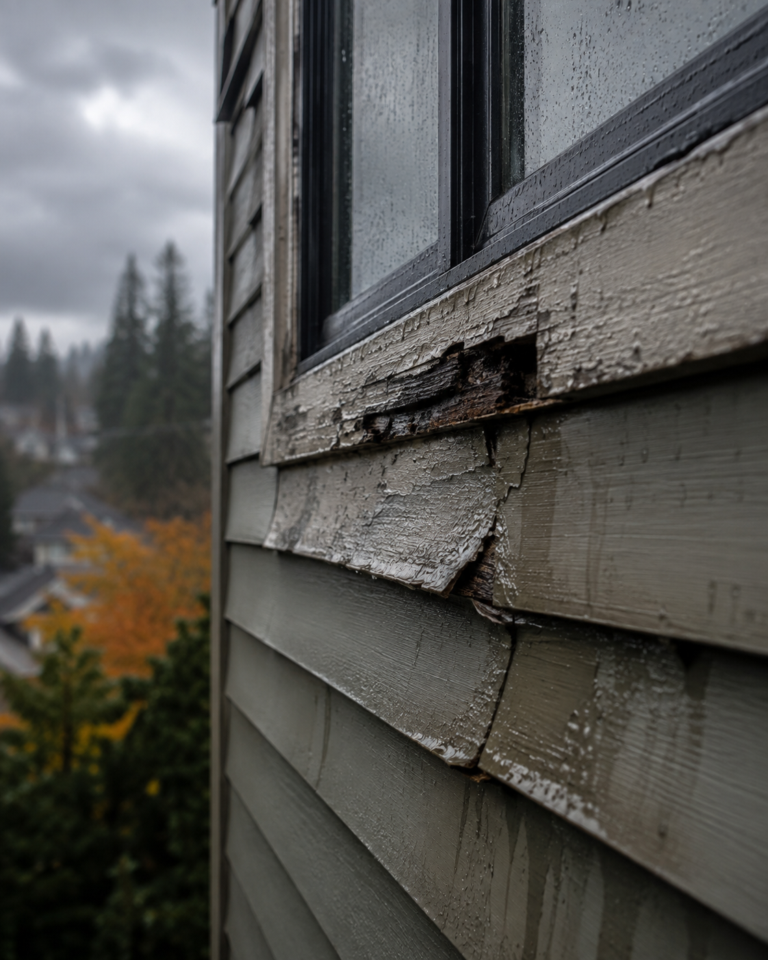
Seattle’s first sustained rain after summer can tell you more about an aging exterior than several months of dry weather.
A wall that looks completely normal in August may begin showing staining, damp trim, failed caulking, swelling, or other warning signs once rain and wind start testing the exterior again.
That does not mean every suspicious spot requires new siding.
It does mean homeowners should understand what their siding is actually supposed to do.
A siding system is not simply a layer of boards attached to a house. In Western Washington, durable exterior protection depends on several components working together: siding, weather-resistive barrier, flashing, trim, window and door transitions, sheathing, penetrations, soffits, sealants, and drainage details.
When one of those components stops doing its job, water can reach places homeowners cannot see.
Why Fall Rain Is Such a Useful Test
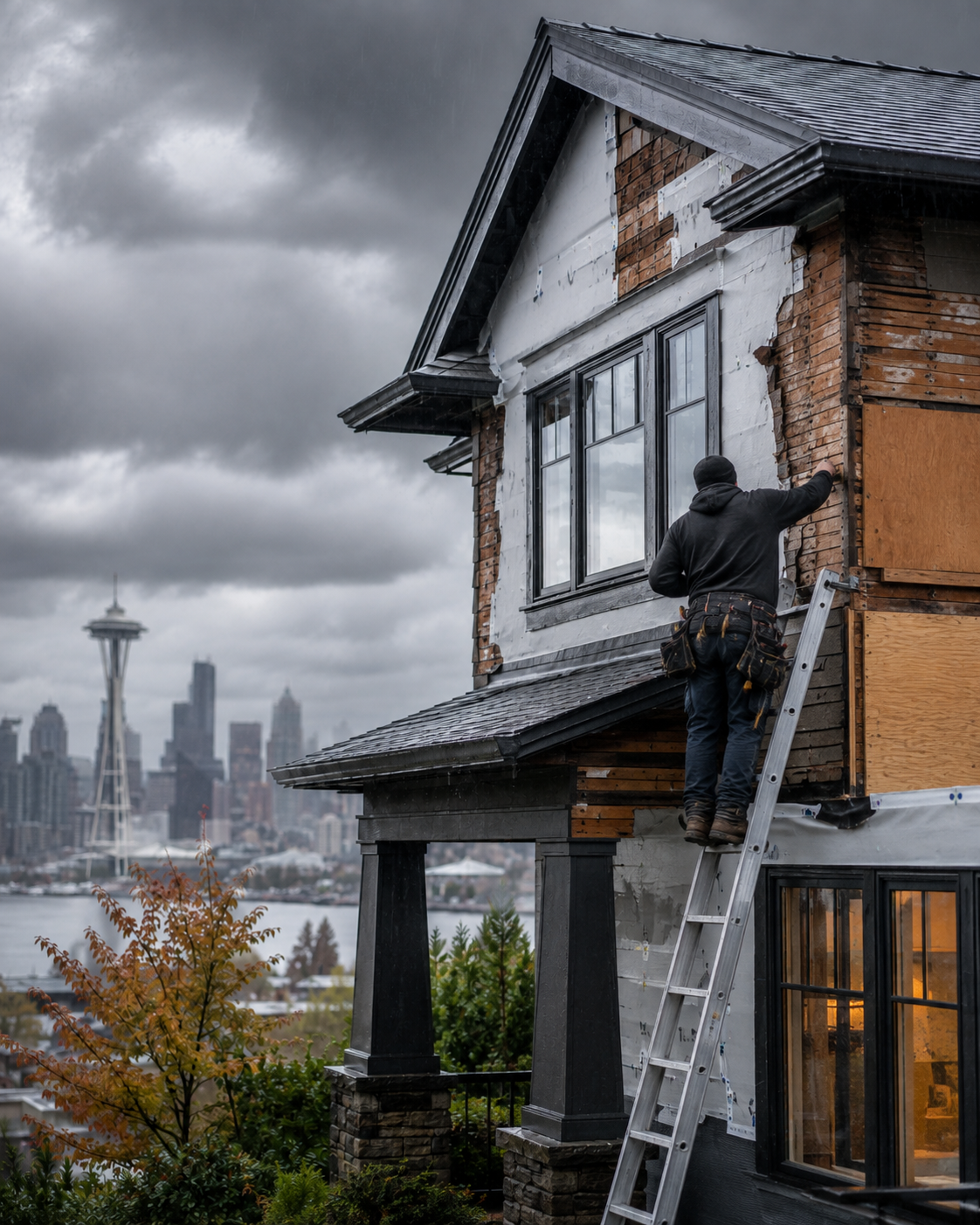
Summer can make an exterior look healthier than it really is.
Materials dry out. Damp sheathing may temporarily lose moisture. Small openings around trim are less obvious because they are not being exposed to repeated rain.
Then Seattle’s weather changes.
Wind can push rain against elevations that receive very little direct water during calmer conditions. Water begins moving across window heads, trim, siding joints, roof-to-wall intersections, exterior blocks, and other transitions.
That is when weaknesses can become easier to identify.
Look for:
- Staining below windows or exterior penetrations
- Soft or deteriorating window trim
- Peeling or bubbling paint
- Loose, cracked, swollen, or deteriorated siding
- Open joints or failed sealant
- Dark areas that remain wet longer than the surrounding siding
- Interior staining near exterior walls or window openings
- Visible deterioration where siding meets decks, roofs, trim, or horizontal transitions
One symptom alone does not automatically mean the entire house needs to be re-sided.
The pattern matters.
The Siding Is Only the Outer Layer
One of the most important things Seattle homeowners can understand is that siding is not intended to function as the home’s only defense against water.
Some moisture can get behind an exterior cladding system.
The wall therefore needs a second layer of protection that directs that moisture back toward the exterior.
That is where the weather-resistive barrier, flashing, tapes, drainage details, and properly sequenced installation become critical.
During a full siding replacement, KV Construction can remove the old exterior material and evaluate conditions that are normally hidden.
If deteriorated sheathing or exterior dry rot is discovered, those areas can be addressed before new siding covers the wall again.
The replacement process can then rebuild the exterior from the wall outward instead of simply installing attractive new material over unresolved problems.
Windows Are One of the Most Important Areas to Watch
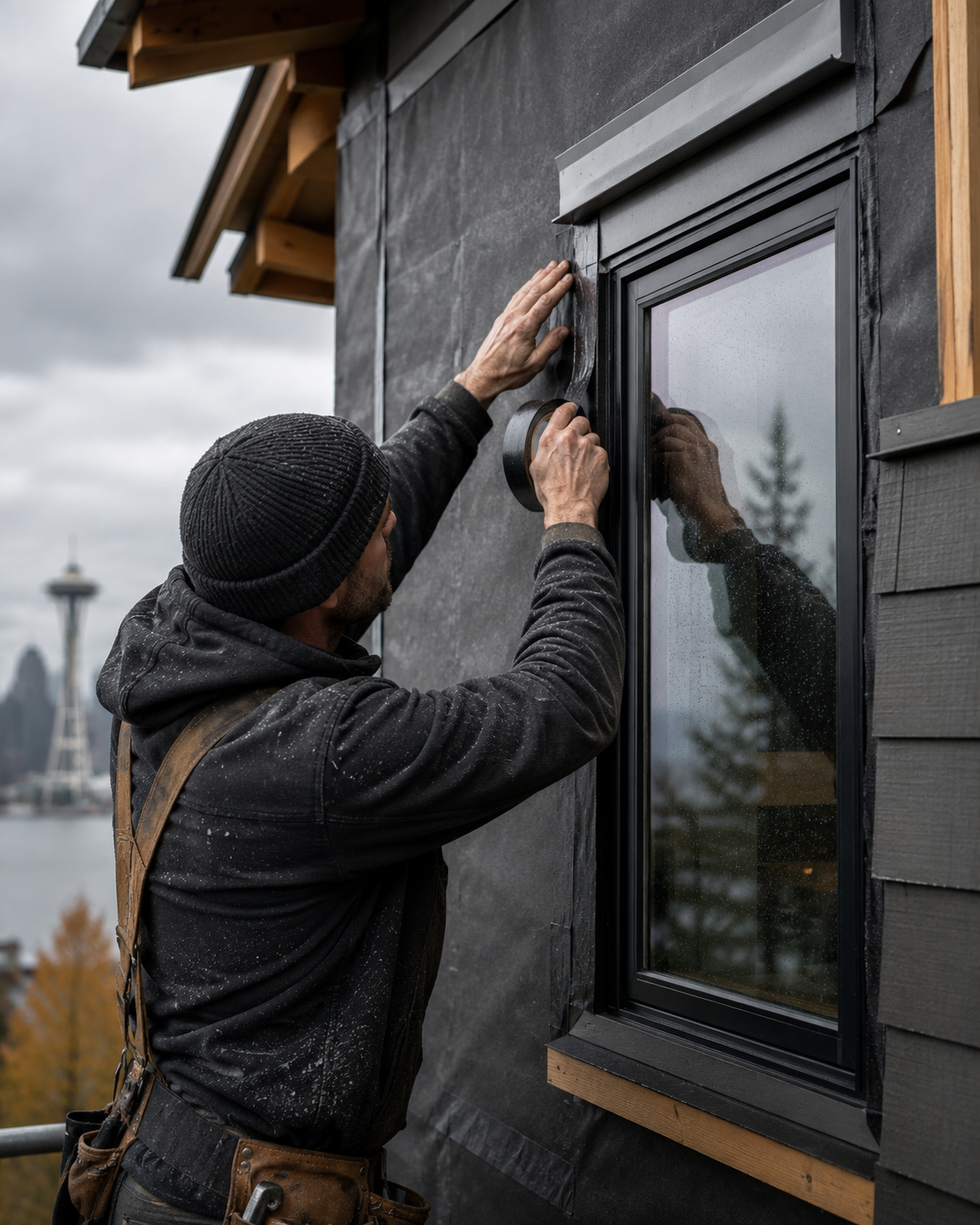
Windows create interruptions in the wall system.
That makes the transition between window, flashing, trim, weather barrier, and siding especially important.
On KV Construction siding projects, waterproofing around openings may include flashing tape, properly integrated weather-resistive barrier, metal head flashing, trim flashing, and other project-specific details designed to direct water away from the opening.
The exact assembly depends on the home.
The principle does not: water should be directed outward rather than trapped behind the siding.
This is also one reason homeowners planning both siding and window replacement should consider coordinating the two projects. Replacing windows while the exterior wall is already open can allow the window and siding systems to be integrated as part of one waterproofing sequence.
What Happens When Water Gets Behind Old Siding?
The visible siding can sometimes hide the larger problem.
Once water repeatedly reaches wood-based sheathing, trim, or framing, deterioration can spread beyond the original entry point.
During tear-off, contractors may discover damaged T1-11 sheathing, deteriorated OSB or plywood, soft trim, or framing damage around openings and exterior transitions.
Covering those areas without addressing the underlying deterioration does not restore the wall system.
That is why KV Construction treats exterior dry rot work primarily as part of a larger siding or exterior-envelope project rather than positioning the company around isolated handyman-style repairs.
The objective is to solve the exterior problem that allowed the deterioration to develop.
Patch Repair or Full Siding Replacement?
A localized repair can make sense when the problem is genuinely isolated and the surrounding wall assembly remains in good condition.
But the decision changes when the same symptoms appear repeatedly.
A full siding replacement deserves consideration when:
- Deterioration exists across several elevations
- Multiple window or door transitions are failing
- Large areas of the original sheathing need attention
- The existing siding is approaching the end of its practical service life
- Previous repairs have not stopped recurring moisture problems
- Different parts of the exterior have been patched repeatedly over time
- The homeowner wants to keep the property long term and rebuild the exterior as one system
This is where replacing “a few boards here and there” can become a poor fit for the actual condition of the house.
Why KV Construction Frequently Uses James Hardie
For many Seattle re-siding projects, KV Construction installs James Hardie fiber cement siding.
Fiber cement provides a durable exterior surface without the rot vulnerability associated with traditional wood siding.
James Hardie offers lap siding, shingles, panels, trim, and factory-finished ColorPlus options, allowing the exterior to be designed around both the architecture of the home and long-term performance goals.
But KV Construction does not treat the siding board itself as the entire solution.
A successful James Hardie project still depends on proper clearances, fastening, flashing, weather-barrier integration, trim transitions, penetrations, and sealant details.
Material and installation have to work together.
What a Full KV Construction Re-Side Can Include
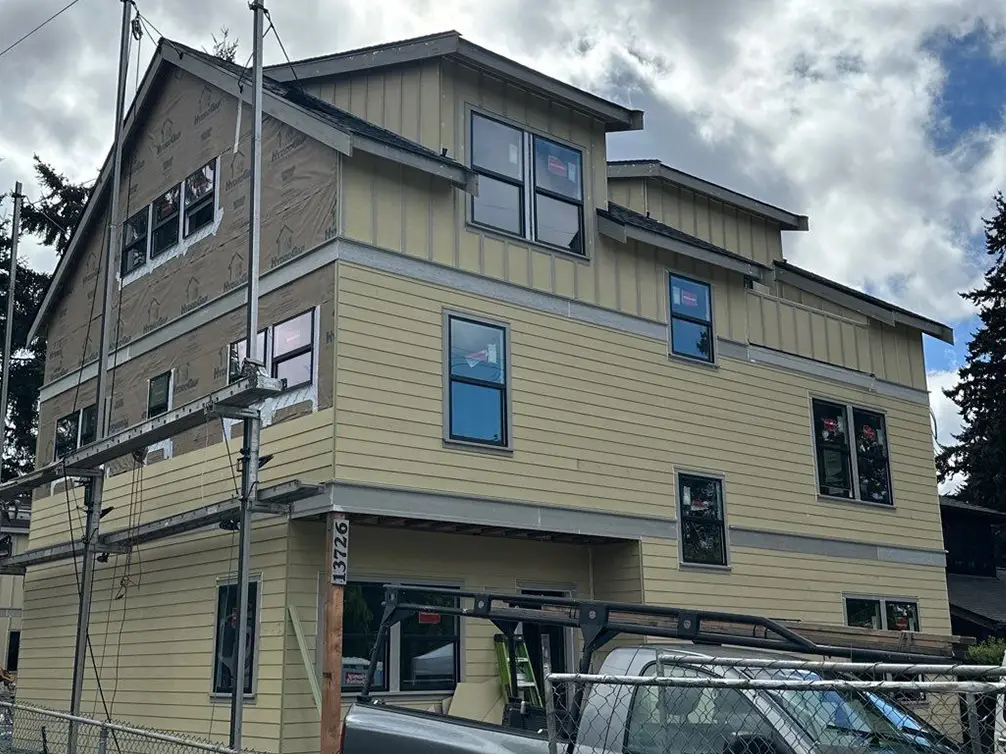
Every house is different, but a complete siding replacement can involve much more than removing and replacing siding.
Depending on the project, the work may include:
- Old siding tear-off.
- Inspection and replacement of deteriorated sheathing.
- Exterior dry rot correction where necessary.
- Installation of a new weather-resistive barrier.
- Sealing and integration around windows and doors.
- Metal flashing at vulnerable transitions.
- New window, door, and corner trim.
- Exterior light, outlet, and water-bib blocks.
- James Hardie lap siding, panels, shingles, or a combination of profiles.
- Soffit and fascia work where included in the exterior scope.
- QUAD MAX sealant application at appropriate joints.
- Priming and painting when the project uses primed James Hardie products.
The finished siding is what people notice.
The hidden preparation is what helps the exterior perform.
Before Seattle’s Wet Season Settles In
The first fall storm does not necessarily mean you need new siding.
It does create an opportunity to see how your exterior behaves when it is actually being tested by rain and wind.
If one small problem appears, document it.
If the same issues appear across multiple walls, around several windows, or in areas that have already been repaired before, the conversation should move beyond another patch.
A complete exterior evaluation can help determine whether the problem is isolated or whether the wall system itself is reaching the point where full siding replacement makes more sense.
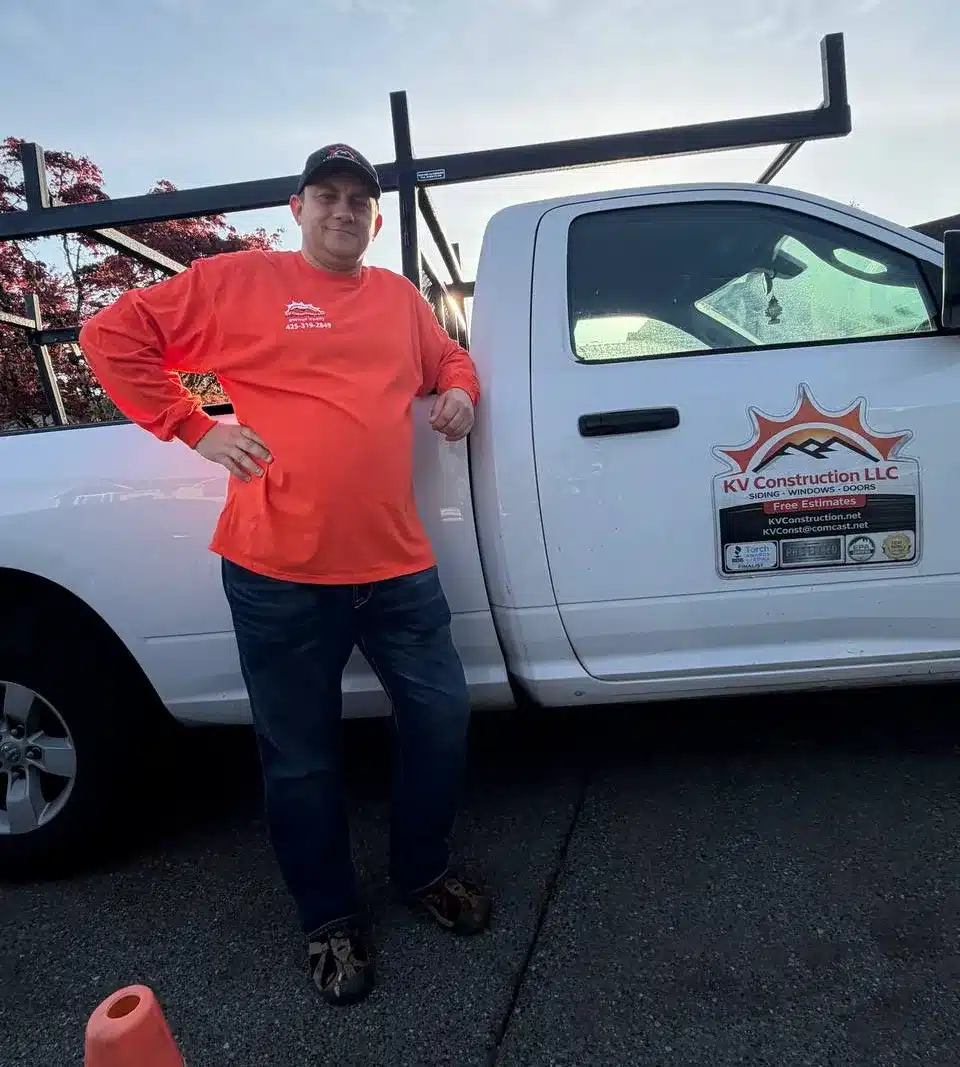
KV Construction specializes in full siding replacement, James Hardie fiber cement siding, exterior dry rot correction, and coordinated window replacement for Seattle-area homes.
The company is family-owned and owner-operated, a James Hardie Preferred Remodeler, EPA Lead-Safe Certified, and backs its workmanship with a 5-Year KV Workmanship Warranty.
Request a Free Siding Consultation to discuss whether your home needs a localized solution or a complete exterior replacement designed for Pacific Northwest weather.